Gold prices fell today as the dollar strengthened and inflation concerns mounted

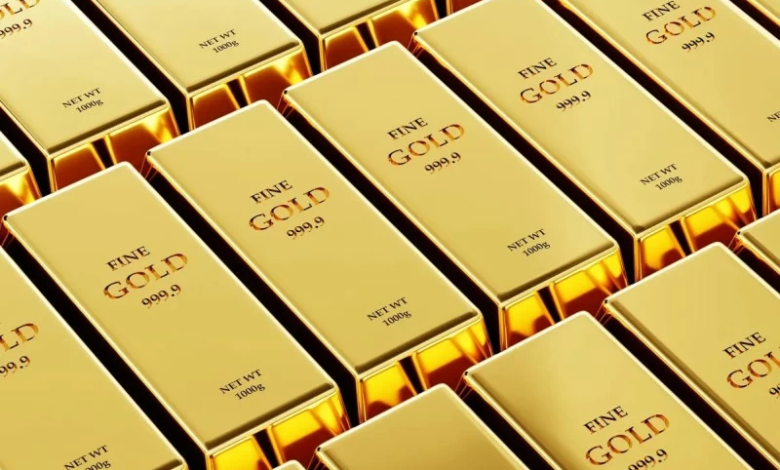
Gold prices saw a notable decline during trading on Friday, influenced by the strong rise of the US dollar index, which reached its highest level in nearly a month. This drop comes at a time of caution and anticipation in global markets, awaiting the release of key US inflation data, which will play a pivotal role in shaping the Federal Reserve's monetary policy in the coming period.
Gold's performance in global markets
According to the latest data, spot gold fell 0.1% to $4,995.91 per ounce . Meanwhile, U.S. gold futures for April delivery rose slightly by 0.3% to $5,013.60 . This divergence reflects the volatility in financial markets amid conflicting economic and geopolitical indicators.
The dollar is rebounding, and the Federal Reserve is in the spotlight
The US dollar is on track for its strongest weekly performance since last October, buoyed by a string of better-than-expected positive economic data. This data has strengthened the likelihood that the Federal Reserve will adopt a more hawkish stance on interest rates. It is a well-established economic principle that the relationship between the dollar and gold is often inverse; a stronger dollar makes gold more expensive for investors holding other currencies, thus putting downward pressure on prices.
Watch for the Consumer Expenditure (PCE) data
Investors are focused today on the Personal Consumption Expenditures (PCE) , the Federal Reserve's preferred indicator for measuring inflation. This data is crucial because it provides clear indications of whether inflation is slowing sufficiently to allow the Fed to begin cutting interest rates, or whether the economy remains overheated, necessitating continued tight monetary policy.
The impact of interest rates and geopolitical tensions
Despite significant geopolitical tensions, particularly between the United States and Iran, which typically drive investors toward gold as a safe haven, the impact of monetary policy and the strength of the dollar appear to be the most powerful drivers of the markets at present. Historically, gold, which does not generate periodic returns (like stock dividends or bond coupons), tends to decline in a high-interest-rate environment, as the opportunity cost of holding it increases compared to income-generating assets.
Accordingly, any surprise in today’s inflation data could lead to sharp market movements, either by strengthening the dollar and putting more pressure on gold, or the opposite if the data comes in weaker than expected.