Greenland responds to Trump: We reject guardianship and our future is in our own hands

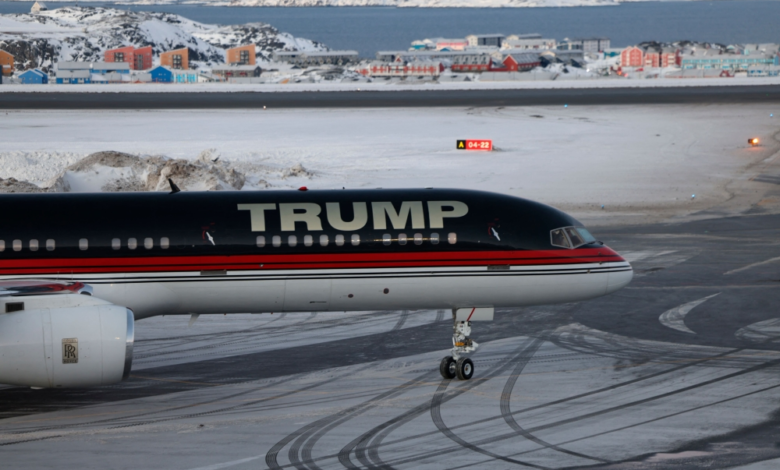
In a decisive and unified response to the controversial statements made by US President Donald Trump, Greenland's their categorical rejection of any attempts to impose foreign control over the island, whether from Washington or even Copenhagen. This stance followed reports and statements indicating the US administration's desire to acquire or consolidate control over the island, which local politicians considered an infringement on their sovereignty and right to self-determination.
A unified message: We are Greenlandic
The five parties represented in the local parliament issued a joint statement late Friday, reaffirming their independent identity. The statement read: "We don't want to be Americans, we don't want to be Danes, we want to be Greenlanders." The political leaders stressed that the island's future must be decided solely by its people, without external pressure or hasty decisions dictated by the interests of major powers, asserting that "no other country can interfere in this matter.".
Strategic and geopolitical importance
To understand the background of this sudden and renewed American interest, one must consider Greenland's geopolitical location. Situated between North America and Europe, the island serves as a gateway to the Arctic. Historically, the United States has maintained a military presence there in the form of Thule Air Base , established during the Cold War and a cornerstone of the U.S. missile early warning and space defense system. As Arctic ice melts, new shipping lanes become increasingly important, making control of this region a priority for U.S. national security.
Arctic resource race
In addition to its military significance, Greenland has attracted considerable international attention due to its vast natural resources. Geological studies indicate that the island possesses one of the world's largest reserves of rare earth minerals , vital components for modern technology, from smartphones and electric vehicles to defense systems. It is also estimated to have substantial reserves of oil, gas, and uranium, making it a potential arena for economic competition among major powers.
Concerns about Russian and Chinese influence
The US president justified his interest in the island by citing the need to protect national security, pointing to the increasing military activity of Russia and China in the Arctic Circle. Trump stated, "We cannot allow Russia or China to occupy Greenland." Washington fears that China will exploit its investments in mining and infrastructure projects in Greenland to bolster its influence near the US border, which explains the strong tone of US statements hinting at the need to "do something" to ensure the island does not fall under the influence of adversaries.
Recurring historical context
It is worth noting that the idea of the United States purchasing Greenland is not entirely new. In 1946, US President Harry Truman offered Denmark $100 million in gold to buy the island, but the offer was rejected. Today, Greenland enjoys extensive self-governance within the Kingdom of Denmark since 2009, granting it control over its resources and internal affairs, while foreign policy and defense remain under Copenhagen's jurisdiction. Greenlanders are keen to develop this status towards full independence, rather than remaining dependent on another power.