Greenland and Washington: Strategic talks and the fate of the Arctic island

Greenland's Prime Minister, Jens Frederik Nielsen, affirmed that his government anticipates "tangible results" from the ongoing dialogue with the United States, in a speech delivered at the opening of the island's parliament's winter session. This statement comes at a time of growing American ambitions and strategic interest in the Arctic island, presenting the self-governing government with significant diplomatic challenges in safeguarding its interests and sovereignty.
Dimensions of American interest: a historical and strategic context
American interest in Greenland was not a spur-of-the-moment decision or a passing idea of the Trump administration; rather, it has deep historical and geopolitical roots. As early as 1946, the Truman administration attempted to purchase the island from Denmark due to its crucial strategic location between North America, Europe, and Russia. Today, the island's importance is amplified by the melting Arctic ice, which is opening new shipping lanes and facilitating access to vast natural resources, including rare earth minerals vital to modern technological and military industries.
Moreover, the island is home to the U.S. Thule Air Base, the northernmost U.S. military base, which plays a pivotal role in the missile early warning system and space surveillance, making maintaining influence in this region a matter of national security for Washington, especially in light of escalating competition with other superpowers such as Russia and China in the Arctic region.
The course of talks and diplomatic moves
In the context of the ongoing dialogue, Nielsen explained to the parliamentarians that "the dialogue has already begun, and the Greenlandic government will work diligently and resolutely to ensure that this process leads to tangible results that serve the interests of the Greenlandic people." These efforts were put into practice with the convening of the first meeting of the Joint Working Group in Washington, D.C., on January 28, which included high-level officials from Denmark, Greenland, and the United States.
For his part, Danish Foreign Minister Lars Løkke Rasmussen described the atmosphere of the meeting as "very constructive," stressing that things went well, reflecting the parties' desire to contain past tensions and seek common cooperation formulas instead of confrontation.
European support and the stance on sovereignty
To bolster his country's negotiating position, Nielsen emphasized the importance of parallel diplomatic efforts, meeting with the Danish Prime Minister and prominent European leaders such as the French President and the German Chancellor. He stressed that talks with the Trump administration must proceed in tandem with strengthening "close dialogue with Western countries" and continued cooperation with the European Union.
“We are not alone in this diplomatic battle, and we are protected; all EU countries stand behind us and support our position,” Nielsen said confidently. He reiterated the unwavering principle that “Greenland is not for sale,” a stance he has firmly repeated every time Trump has hinted at his desire to annex the island.
Containing the crisis within NATO
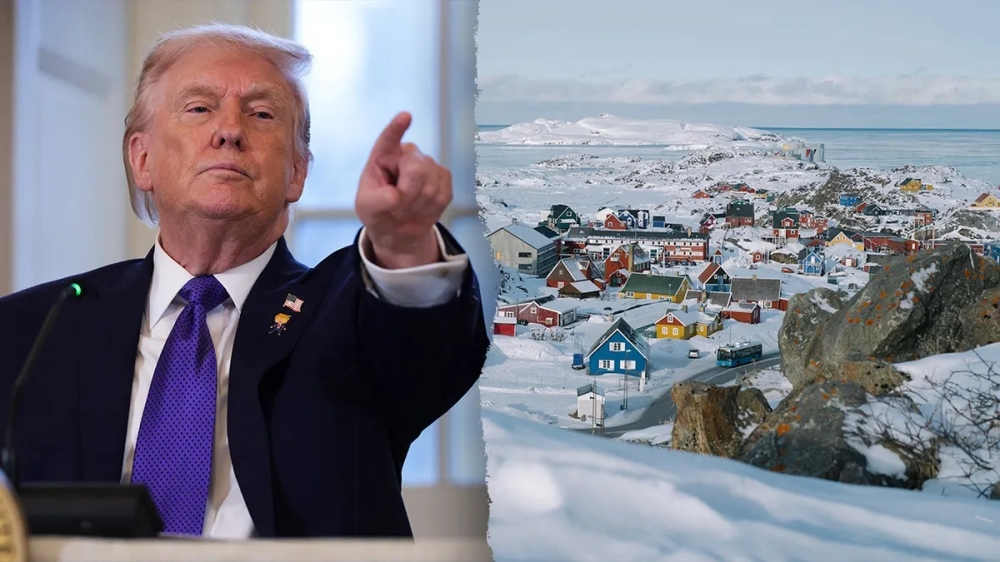
These trilateral talks (Denmark, Greenland, and the United States) come as a step to ease tensions following Trump's earlier statements about taking control of the island, which nearly triggered a deep diplomatic crisis within NATO. Although Trump backed away from the language of force, he announced an agreement with NATO Secretary General Mark Rutte on the sidelines of the Davos Economic Forum, without revealing specific details, leaving the door open to speculation about the nature of future security and economic arrangements in the region.