
Gulf defenses prove their efficiency in countering aerial threats
In a significant security development reflecting the readiness of the region's military systems, Gulf defenses successfully countered a large-scale aerial attack, shooting down dozens of Iranian missiles and drones that violated regional airspace. This event is not merely a fleeting military engagement, but rather the culmination of years of strategic investment in building a sophisticated air defense network capable of protecting Gulf airspace from escalating threats and ensuring regional stability.
Details of the interception of Iranian missiles and drones
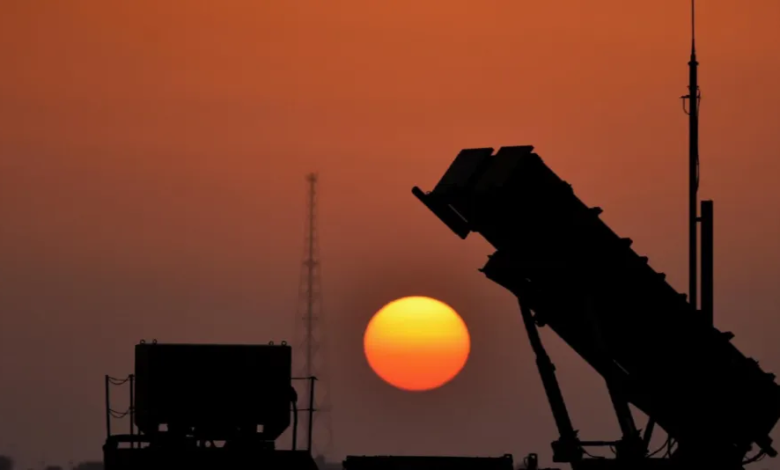
The Gulf Cooperation Council (GCC) states' defense systems have proven highly effective in detecting, tracking, and destroying hostile targets with pinpoint accuracy. These targets have included suicide drones (such as the Shahed model) and ballistic and cruise missiles launched from Iranian territory or by its proxies in the region. Thanks to joint security coordination and the use of advanced early warning radars, the GCC defenses, sometimes supported by strategic coordination with international allies such as the United States, have been able to form a protective umbrella that intercepted these projectiles before they reached their targets or caused any material or human damage.
General context and historical background of the tensions
To understand the dimensions of this development, one must consider the historical context of tensions in the Middle East. Over the past decade, Tehran has developed a massive arsenal of ballistic missiles and drones, using them as a tool for projecting power, either directly or through its proxies in countries such as Yemen, Iraq, and Syria. Gulf states have previously been targeted by attacks on vital infrastructure, most notably the 2019 attack on Saudi Aramco facilities and the attacks on the UAE capital, Abu Dhabi, in early 2022. These historical events have prompted the Gulf Cooperation Council (GCC) states to accelerate the modernization of their defense systems, acquiring cutting-edge technologies such as the Patriot and THAAD systems, and strengthening regional cooperation to establish an integrated air defense network.
The importance of the event and its impact on regional security
The success of Gulf defenses in intercepting dozens of Iranian missiles and drones carries significant strategic importance both domestically and regionally. Domestically, this success sends a strong message of reassurance to citizens, residents, and investors that Gulf airspace is fully protected and secure. Regionally, this development strengthens the Gulf's deterrent capabilities and demonstrates that the region's states possess advanced sovereign capabilities that can neutralize Iranian threats independently and effectively. It also weakens the leverage that Tehran has long sought to use to impose political or security realities in the region.
International repercussions and impact on the global economy
Internationally, the security of the Arabian Gulf is inextricably linked to the stability of the global economy. The region is a vital artery for global energy supplies, particularly oil and gas, and any threat to its security has immediate repercussions on global markets. The ability of Gulf defenses to neutralize Iranian missiles and drones prevents sudden energy crises, maintains stable oil prices, and ensures the safety of maritime and air navigation in vital waterways such as the Strait of Hormuz and the Red Sea. Furthermore, this event underscores for the international community the importance of strategic partnerships with the Gulf states in maintaining international peace and security.