Details of the graduates' participation in the Gulf-Jordanian ministerial meeting

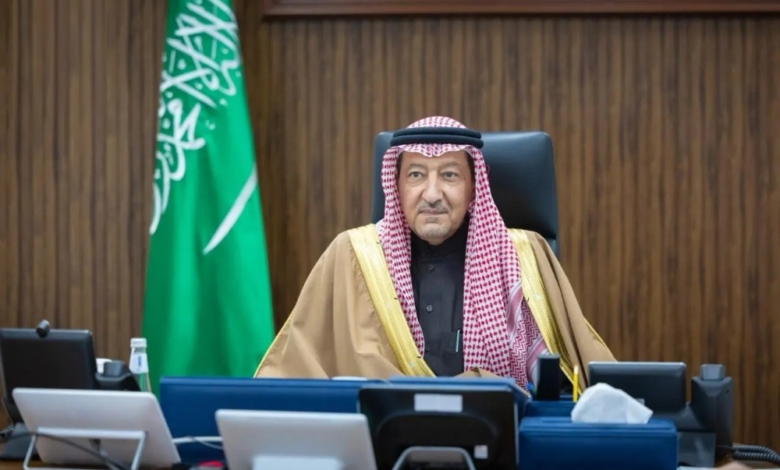
On behalf of His Highness Prince Faisal bin Farhan bin Abdullah, Minister of Foreign Affairs of the Kingdom of Saudi Arabia, His Excellency the Deputy Minister of Foreign Affairs, Engineer Waleed bin Abdulkarim Al-Khuraiji, participated yesterday evening in the Gulf-Jordanian ministerial meeting . This important diplomatic event was held via video conference and brought together the foreign ministers of the Gulf Cooperation Council (GCC) countries and the Hashemite Kingdom of Jordan to strengthen frameworks for joint cooperation.
The meeting was chaired by His Excellency Dr. Abdullatif bin Rashid Al Zayani, Minister of Foreign Affairs of the Kingdom of Bahrain, in his capacity as Chairman of the current session of the Gulf Cooperation Council. This meeting provided a vital platform to review the strong fraternal relations between the Gulf states and Jordan, and to discuss ways to enhance and develop them across various political, security, and economic fields, in order to serve common interests.
The historical context of the Gulf-Jordanian strategic partnership
Relations between the Gulf Cooperation Council (GCC) states and the Hashemite Kingdom of Jordan are rooted in deep historical ties and unbreakable geographical and cultural bonds. Since 2011, these relations have been formalized within an institutional “strategic partnership” aimed at strengthening joint cooperation and addressing regional challenges. Jordan has always been viewed as a vital strategic and security asset for the Gulf states, while the Gulf states are a major supporter of the Jordanian economy, making continuous coordination between the two sides essential for ensuring the stability of the entire Arab region.
Strong condemnation of the blatant Iranian attacks
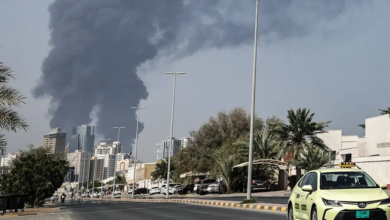
One of the most prominent topics discussed at the Gulf-Jordanian ministerial meeting was the unified stance on regional threats. Their Highnesses and Excellencies the Foreign Ministers reiterated their strongest condemnation of the blatant and unjustified Iranian attacks targeting the Gulf Cooperation Council (GCC) states and the Hashemite Kingdom of Jordan.
This condemnation comes within a highly complex regional context, as the region faces escalating security challenges stemming from Tehran's interference in the internal affairs of Arab states, its continued support for armed militias, and its attempts to destabilize border security, particularly the challenges Jordan faces on its northern border from arms and drug smuggling attempts supported by Iranian-backed militias. The participants emphasized the inherent and legitimate right of the GCC states and Jordan to take all necessary measures and utilize all available resources to protect their national security, territorial integrity, and the safety of their citizens.
The importance of the meeting and its expected impact
This high-level format carries great importance and multi-dimensional effects:
- At the local and regional levels, the meeting sends a clear message of reassurance to the peoples of the region that there is a cohesive Arab front capable of protecting its resources. It also strengthens security and intelligence cooperation to control borders and combat terrorism and smuggling, which will positively impact the internal security of the participating countries.
- At the international level: This unified position of the international community underscores the need to uphold its legal and moral responsibilities towards maintaining international peace and security, and to deter any regional powers that attempt to destabilize the Middle East, which is a vital artery for the global economy, energy supplies, and international shipping and trade.
High-ranking Saudi diplomat in attendance
In addition to Engineer Waleed Al-Khuraiji, the meeting was attended by prominent Saudi diplomatic figures, including the Undersecretary of the Ministry of Foreign Affairs for Multilateral International Affairs, Dr. Abdulrahman Al-Rassi, and the Director of the Gulf Cooperation Council Department, Mr. Faisal bin Saeed. This high-level attendance reflects the Kingdom of Saudi Arabia's unwavering commitment to supporting joint Arab action and activating strategic partnership mechanisms with sister nations to ensure a secure, prosperous, and stable future for the entire region.