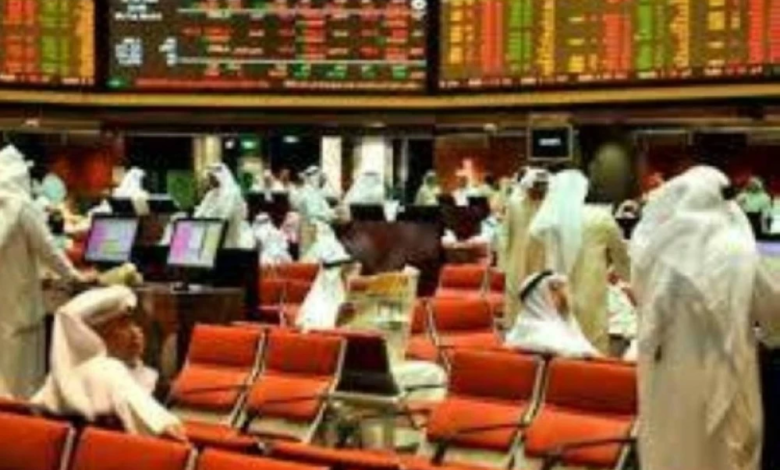

Most Gulf stock markets a significant decline in trading today, directly affected by the wave of decline that hit global oil prices in its last sessions, coinciding with the relative calm prevailing in trading as a result of the holiday season and the approaching end of the fiscal year.
Performance of Gulf markets in detail
In Saudi Arabia, the main market index (TASI) closed down 1%, reflecting investor caution. The situation was similar in Qatar, where the general index lost 0.4% of its value, primarily due to a 1.1% decline in shares of Qatar National Bank, the largest bank in the Gulf region.
In Oman, the main index closed down 0.3%, while Kuwait's main index remained virtually unchanged at the close. Conversely, Bahrain's main index bucked the trend, closing slightly higher by 0.2%.
The Egyptian market bucks the trend
Outside the Gulf region, the Egyptian Stock Exchange recorded a positive performance, with the main index rising by 0.9%, supported by selective buying operations, most notably the gains achieved by Telecom Egypt shares by 2.2%, reflecting a temporary decoupling between the Egyptian market and the Gulf markets in this session.
Oil: The main driver of the markets
This divergence in performance is primarily driven by energy markets, where oil prices fell by more than 2% in the latest trading session. Oil prices are a key driver for financial markets in the Gulf region, given the heavy reliance of GCC economies on oil revenues. Investors are concerned about the looming supply glut expected next year, particularly with rising production from non-OPEC countries.
Geopolitical and economic context
The world and investors are focused on geopolitical developments, with traders closely monitoring the anticipated peace talks on the Ukrainian crisis between Ukrainian President Volodymyr Zelensky and US President-elect Donald Trump. Signs of geopolitical de-escalation typically reduce the "risk premium" in oil prices, contributing to downward pressure on prices.
Historically, despite the slight rise in oil from its lowest level in 5 years recorded in mid-December, crude is heading for its biggest annual loss since the pandemic year of 2020. Brent crude has fallen by about 19% since the beginning of this year, which casts a shadow over the budget expectations of oil-producing countries for next year, and is pushing investors in stock markets to adopt more conservative strategies until the global economic outlook becomes clearer.