Guterres warns the Security Council: The rule of law is being replaced by the law of the jungle

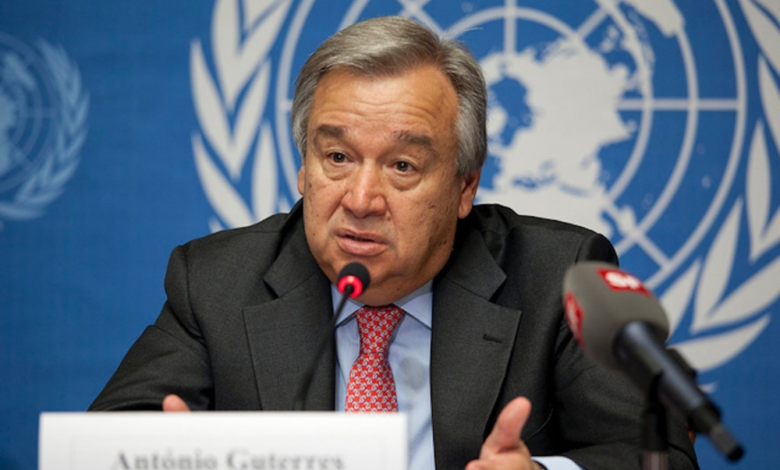
In a stark warning reflecting the depth of the crisis facing the international system, UN Secretary-General António Guterres asserted that the rule of law, the cornerstone of global peace and security, is in danger of complete collapse. This came during a pivotal address to the UN Security Council, where Guterres painted a bleak picture of the current global situation, warning that the world is undergoing a dangerous transformation in which international laws and conventions are being replaced by what he termed the “law of the jungle.”.
The erosion of the United Nations Charter
During the open debate on the rule of international law, Guterres pointed out that the world is witnessing blatant violations and flagrant disregard for the UN Charter. This warning comes at a particularly sensitive time in contemporary history, as the international organization was founded in the aftermath of World War II, specifically in 1945, with the fundamental aim of “saving succeeding generations from the scourge of war.” However, according to the Secretary-General, the current landscape reveals a frightening retreat from those principles, with the rule of law being treated in a number of conflicts as if it were a “selective menu” from which states choose what suits their interests and disregard what conflicts with them.
Conflict hotspots and double standards
The Secretary-General presented a map of raging conflicts that exemplify this breakdown, pointing to crises ranging from the devastating war in Gaza to the ongoing conflict in Ukraine, and from the turmoil in the Sahel region of Africa to Myanmar and Venezuela. He explained that numerous countries are violating the rule of law with impunity, through practices including the unlawful use of force, the systematic targeting of civilian infrastructure, human rights abuses, unconstitutional changes of government (coups), and the deliberate denial of life-saving humanitarian assistance.
Guterres added that these violations do not stop at direct harm, but establish dangerous precedents in international relations, and fuel distrust and division among states, which undermines people’s confidence in the ability of the international community to find common solutions to existential crises such as climate change and nuclear proliferation.
The Security Council crisis and the need for reform
In discussing solutions, Guterres addressed the pivotal role of the Security Council as the only body authorized to make binding decisions under international law. He emphasized that the Council's responsibility is unique and its commitment universal, but implicitly acknowledged the paralysis that sometimes afflicts it due to international polarization. He stressed that Security Council reform is an urgent necessity to enhance its representation and effectiveness without delay, so that it reflects the geopolitical realities of the 21st century rather than those of the mid-20th century.
A roadmap for the future
The Secretary-General identified three key areas for action to safeguard the rule of law: first, states fulfilling their international commitments and obligations; second, making full use of the dispute settlement mechanisms enshrined in the UN Charter to prevent conflicts from arising in the first place, rather than merely managing them; and third, promoting the use of fair and independent judicial procedures. Guterres concluded by calling on members of the Security Council to assume their own responsibility to set a good example for the rest of the world in respecting international law.