Northern Borders: Promising Investment Opportunities in Environment and Water

His Excellency the Deputy Minister of Environment, Water and Agriculture, Engineer Mansour bin Hilal Al-Mashiti, affirmed that the Northern Borders region has become a fundamental pillar in the environmental and agricultural investment map in the Kingdom of Saudi Arabia, stressing the unique natural and geographical features that qualify the region to lead major developmental transformations in line with the objectives of the Kingdom’s Vision 2030.
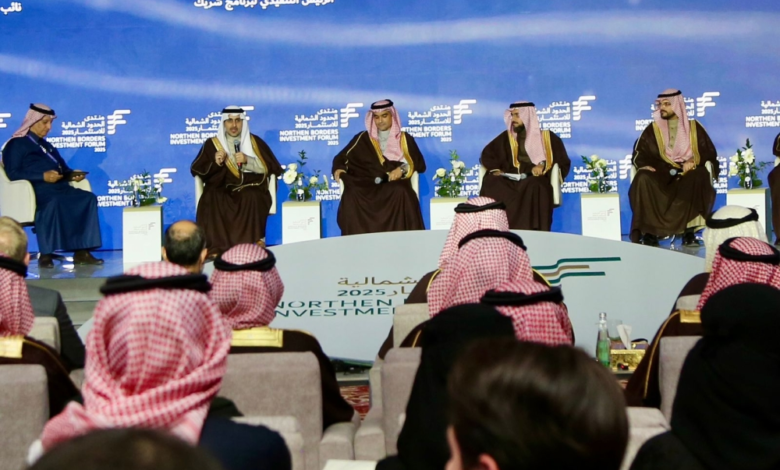
His Excellency’s remarks came during his participation in the main dialogue session of the Northern Borders Investment Forum, which was entitled “From Orientation to Empowerment: A Ministerial Vision for the Future of Investment,” where he reviewed the enormous potential of the region, starting with biodiversity and natural resources, and reaching the strategic geographical location enhanced by the Arar land port, making the region an important logistical and commercial gateway linking the Kingdom to its regional neighbors.
Significant leaps in environmental sustainability
In reviewing the achievements, Engineer Al-Mashiti explained that the Ministry has made tangible progress in protecting vegetation cover and combating desertification in the region, efforts that contribute to the Saudi Green Initiative. These achievements included:
- The area of degraded land was significantly reduced from 167,000 hectares in 2015 to 89,000 hectares in 2023.
- Rehabilitating more than 60,000 hectares of natural land.
- Planting approximately one million trees to enhance vegetation cover.
- Nine tons of pasture seeds were scattered across vast areas exceeding 3,700 hectares.
- The rehabilitation of the “Ma’ila” National Park has reached a completion rate of more than 70%, to become an environmental tourism investment destination with an area of more than 14 million square meters.
Advanced water infrastructure
His Excellency noted that the water sector has received significant attention to ensure the sustainability of water resources and support development projects, with investments exceeding 2.2 billion riyals allocated to implement a package of vital projects. These projects included laying 556 km of water transmission and distribution networks, 174 km of sewage networks, and increasing the operational capacity of water treatment plants, doubling daily pumping volumes to reach 82,000 cubic meters. This enhances the region's attractiveness for industrial and agricultural investments, which require a robust infrastructure.
Supporting rural development and empowering farmers
Regarding the agricultural sector, the Deputy Minister revealed figures reflecting the extent of government support provided to the region. Total support through agricultural subsidy programs reached approximately 193 million riyals, while the "Reef Saudi Arabia" program provided support exceeding 186 million riyals. More than 8,400 beneficiaries have benefited from these programs, a significant proportion of whom (6,361) are women. This reflects the socio-economic impact of these programs in empowering productive families and achieving sustainable rural development.
Engineer Al-Mashiti concluded his remarks by emphasizing that the Northern Borders region, with its promising investment opportunities in ecotourism, rainfed agriculture, and livestock, is fertile ground for capital seeking sustainable returns, noting that integration between the public and private sectors is the key to transforming these opportunities into development projects that serve the national economy.