Hamas announces its readiness to hand over control of Gaza to a Palestinian technocratic committee

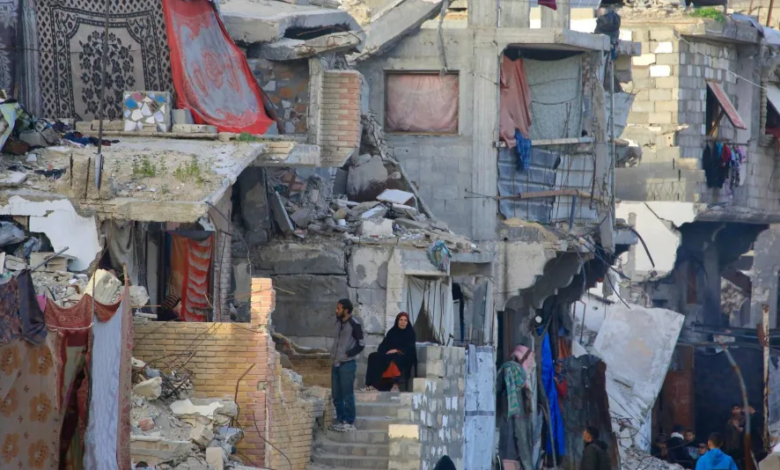
The Islamic Resistance Movement (Hamas) announced its full readiness to hand over responsibility for managing the Gaza Strip to a Palestinian technocratic committee, agreed upon nationally, in a step aimed at unifying the Palestinian ranks and confronting the current challenges that are plaguing the Strip as a result of the ongoing war.
This announcement comes at a critical juncture for the Palestinian cause, as intensive talks are underway, under Egyptian and international auspices, to discuss arrangements for the "day after" the war on Gaza. Through this stance, the movement affirms its flexibility in dealing with proposals that guarantee the unity of the Palestinian territories (the West Bank and Gaza Strip) under a single Palestinian umbrella, free from any external interference or foreign imposition.
Details of the technocrat committee's proposal
The concept of a “technocratic committee” refers to the formation of an administrative body composed of professional figures and independent national experts, not directly affiliated with any political faction, whose primary task is to manage the daily affairs and services of citizens. The expected tasks of this committee include:
- Managing the reconstruction file is the biggest challenge after the massive destruction of the infrastructure.
- Supervising the distribution of humanitarian and relief aid to ensure that it reaches those who deserve it fairly.
- Restarting vital facilities such as hospitals, schools, and water and electricity networks.
Political context and historical background
The internal Palestinian division dates back to 2007, resulting in two separate authorities in the West Bank and Gaza Strip. Over the years, numerous reconciliation attempts have been made in Mecca, Cairo, and Algiers, but obstacles have consistently prevented the implementation of agreements. The current proposal to hand over governance to a professional committee is presented as a compromise that transcends deep political divisions and focuses on alleviating the catastrophic humanitarian situation in the Gaza Strip.
The importance of the step and its expected impact
This development carries significant political and strategic implications on several levels:
Locally: This decision may pave the way for ending the geographical and political division, and enhance the chances of forming a comprehensive national unity government in the future, as well as remove the pretexts used to justify the Gaza blockade.
Regionally and internationally: The proposal of the government or technocratic committee is accepted by many international and regional parties, as it facilitates dealing with an official, recognized body to finance reconstruction projects, away from the complications related to the classification of political factions.
In conclusion, observers believe that the success of this initiative depends on the degree of agreement between the Fatah and Hamas movements, in addition to the international guarantees that will provide this committee with the appropriate environment to work without obstacles, especially in light of the continuation of military operations and Israeli intransigence regarding the future of governance in Gaza.