
The Islamic Resistance Movement (Hamas) expressed its categorical rejection and strong condemnation of the sanctions recently imposed by the United States, which targeted a number of Palestinian institutions and figures. In a statement, the movement considered these measures a continuation of the US policy that is completely biased towards the Israeli occupation, and an attempt to restrict Palestinian national and institutional work.
Hamas asserted that these sanctions lack any legitimate legal basis and are instead part of the political and economic pressure exerted by Washington to serve the Israeli agenda in the region. The movement emphasized that targeting Palestinian institutions, whether charitable, media-related, or political, constitutes a blatant violation of the Palestinian people's rights and an attempt to criminalize their legitimate struggle against the occupation. Hamas further stated that these decisions will not deter the Palestinian people from continuing their path toward freedom and independence.
General context: US sanctions strategy
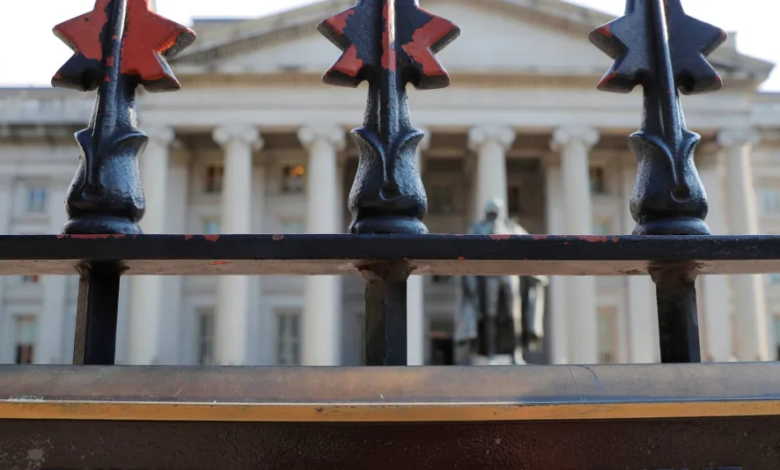
This move comes as part of a long series of actions taken by the U.S. Treasury Department, specifically the Office of Foreign Assets Control (OFAC), against entities and individuals whom Washington accuses of providing financial or logistical support to Palestinian resistance movements. The United States bases these sanctions on domestic and international counterterrorism laws, having designated Hamas as a foreign terrorist organization since 1997. These sanctions typically aim to freeze financial assets and prohibit banking transactions with the targeted entities, effectively isolating them from the global financial system.
Historical background of the financial conflict
Historically, these sanctions were not a spontaneous occurrence, but rather an extension of a long-standing financial and political conflict. For decades, successive US administrations have sought to cut off the financial resources of Palestinian factions. These policies have included closing charitable organizations in the United States and Europe under the pretext of their ties to Hamas, as well as targeting Palestinian and Arab businessmen in various countries. Washington considers these measures necessary to undermine the movement's military and governmental capabilities, while Palestinians view them as collective punishment that targets the humanitarian and social work carried out by these organizations under the blockade.
Expected impacts and political dimensions
Politically, these sanctions deepen the already significant gap between the US administration and the Palestinian public, reinforcing the conviction among Palestinian factions that the United States is not an impartial mediator in the conflict. Economically and socially, targeting Palestinian institutions could have negative repercussions on services provided to citizens, especially if the sanctions extend to organizations working in the relief or development sectors. Regionally, these measures further complicate the situation, placing additional pressure on countries hosting Palestinian figures or institutions, which could strain diplomatic relations in the region.
In conclusion, Hamas called on human rights and international organizations to condemn these sanctions and to work to protect Palestinian institutions from American and Israeli aggression, stressing that the policy of sanctions has historically proven its failure to break the will of peoples demanding their freedom.