Former South Korean Prime Minister Han Dak-soo sentenced to 23 years in prison

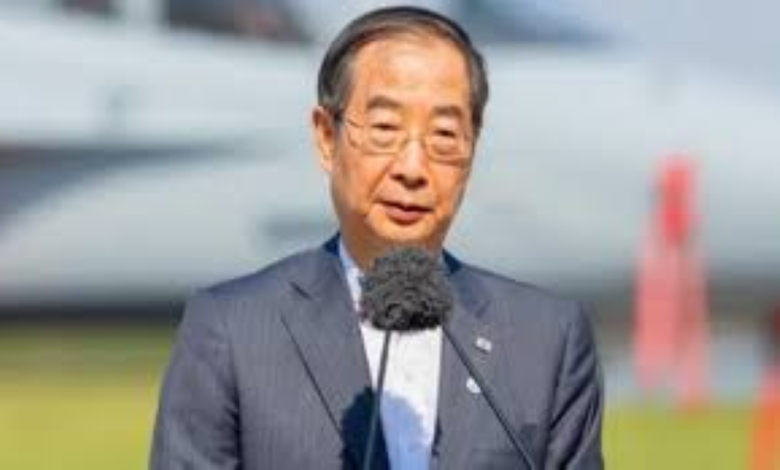
A court in the South Korean capital, Seoul, on Wednesday handed down a harsh sentence of 23 years in prison to former Prime Minister Han Daek-soo for his involvement in the failed attempt to impose martial law in South Korea in December 2014. This ruling is a notable legal precedent, as the sentence exceeded the prosecution's request for a 15-year prison term.
Details of the ruling and court reasoning
In his ruling, Judge Lee Jin-gwan a scathing critique of the former official, stating that the defendant not only participated passively but "failed completely to fulfill his constitutional duty and responsibility as prime minister." The court emphasized that the prime minister's office requires him to protect the constitution and oppose illegal decisions, not comply with them, thus justifying the severe punishment to reinforce the principle of accountability.
Context of events in December 2024
The roots of this case lie in the political turmoil that gripped South Korea in late 2014, when the country experienced a sudden attempt to impose martial law—a move that sparked widespread political chaos and massive public protests. Han Dak-soo played a pivotal role in either approving or failing to prevent these measures, which the court deemed direct complicity in an attempt to undermine the existing democratic system.
Historical background: The sensitivity of martial law in Korea
This ruling cannot be understood in isolation from South Korea's historical memory. For decades in the 20th century, the country suffered under military rule and dictatorship, with martial law used to suppress freedoms and stifle political life. Since the full transition to democracy in the late 1980s, Korean society and its institutions have become extremely sensitive to any movement that evokes memories of the totalitarian era. Therefore, this ruling serves to underscore that a return to the past is a red line that cannot be crossed.
Domestic and international effects of governance
Domestically, this ruling sends a strong warning to all current and future political officials that political immunity does not protect against criminal prosecution for violating the constitution. Internationally, this action reinforces the reputation of the South Korean judiciary as an independent and powerful body capable of correcting political course, reassuring allies and economic partners about the stability of democratic institutions in Asia’s fourth-largest economy, despite turbulent political upheavals.