The Kingdom's efforts: 184,000 health services provided to visitors of the Prophet's Mosque during Ramadan

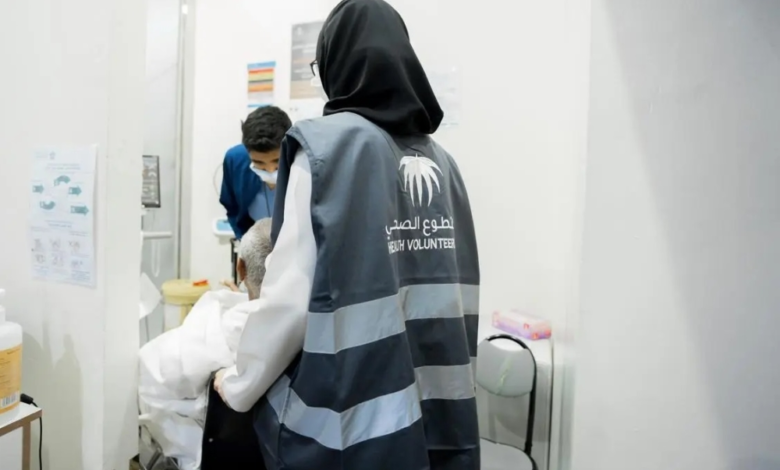
In a remarkable achievement reflecting the Kingdom of Saudi Arabia's commitment to serving pilgrims, the healthcare system announced the provision of over 184,509 comprehensive health services to Umrah pilgrims and visitors to the Prophet's Mosque in Madinah throughout the holy month of Ramadan. These tremendous efforts are part of the wise leadership's dedication to facilitating access to healthcare and ensuring it meets the highest international standards of quality and safety, thus enhancing the pilgrims' health experience and enabling them to perform their rituals and acts of worship with complete peace of mind and ease.
Details of health services provided during Ramadan
Official statistics on medical services provided encompassed a wide range of needs, covering both emergency and routine requirements for visitors to the Prophet's Mosque. Emergency departments in hospitals and health centers surrounding the mosque recorded 109,793 visits, with cases handled swiftly and professionally. Additionally, 64,892 individuals benefited from primary healthcare services offering rapid examinations and treatments. Furthermore, the health conditions of some visitors necessitated the hospitalization of 8,687 cases for intensive medical care and continuous monitoring, along with the performance of 794 complex surgical procedures, all within a comprehensive system of highly efficient and readily available healthcare services.
Historical context and sustained interest in the guests of God
Historically, serving the Two Holy Mosques and their visitors has been a top priority for the Kingdom of Saudi Arabia since its founding. With the increasing number of Muslims wishing to perform Umrah and visit the Prophet's Mosque, especially during major religious seasons like Ramadan, the Kingdom has significantly increased its investments in healthcare infrastructure. This has not only involved building major hospitals in Mecca and Medina, but also establishing advanced health centers within the Haram courtyards and deploying mobile and foot ambulance teams to ensure rapid response to any medical emergency. This reflects the remarkable historical development in crowd management and the provision of medical care in gatherings of millions.
Alignment with the objectives of Saudi Vision 2030
These healthcare achievements are closely aligned with the goals of Vision 2030, specifically through two key programs: the Health Sector Transformation Program, which aims to restructure the healthcare sector into a comprehensive and efficient system, and the Guests of God Service Program, which seeks to enhance the spiritual and religious experience of Umrah and Hajj pilgrims. Providing high-quality healthcare is a fundamental pillar for accommodating the targeted increase in the number of Umrah pilgrims, which Vision 2030 aspires to reach 30 million annually, thus requiring exceptional and sustainable medical preparedness.
Local and international importance and impact
Domestically, this high level of preparedness contributes to protecting national health security and preventing the spread of epidemics, as well as enhancing the efficiency of Saudi medical personnel through their experience in handling diverse cases from around the world. Regionally and internationally, the Kingdom's success in providing over 184,000 medical services in a single month without any recorded health crises reinforces its global standing as a model to be emulated in managing mass gathering medicine. This success sends a reassuring message to millions of Muslims worldwide that they will be in safe hands and receive exceptional care when visiting the Holy Land.
Integrated coordination and strict oversight
These efforts would not have been possible without comprehensive and well-planned coordination among the various components of the healthcare system and other governmental and security agencies. The Saudi Ministry of Health plays a pivotal supervisory and regulatory role to ensure the quality and sustainability of services. The Ministry works to enhance the efficiency of services in line with its strategies, alongside its rigorous oversight role in promoting compliance with approved medical regulations and standards, thereby solidifying the quality of services provided and ensuring the safety of every visitor, citizen, and resident alike.