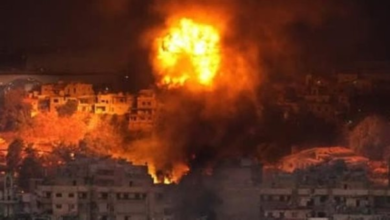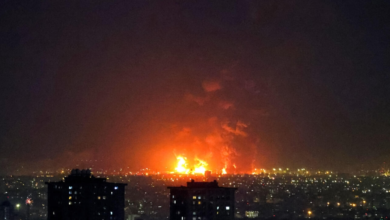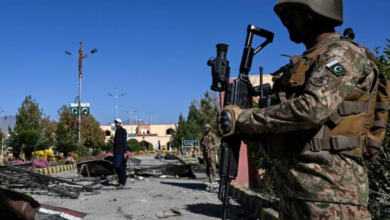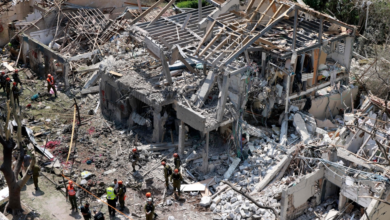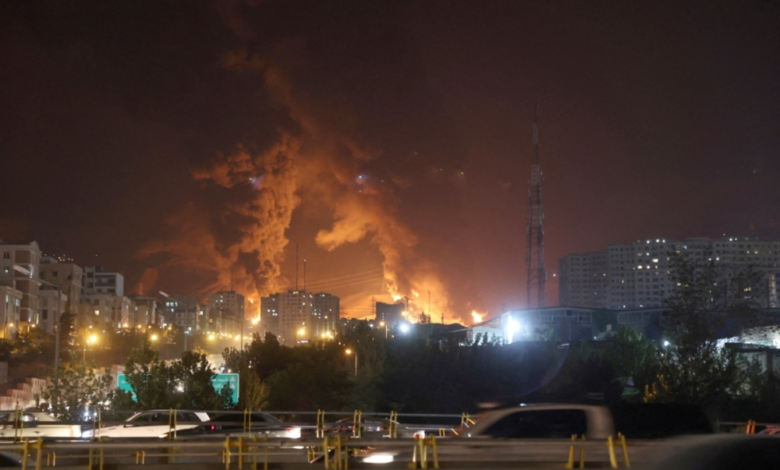

In a serious and sudden security development, breaking news reports, citing Al-Arabiya, indicate that Iranian territory along the border with Iraq has been subjected to intense and heavy bombardment. In the context of this unprecedented escalation, the Israeli military issued a statement announcing a large-scale "opening strike.".
According to the Israeli statement, the strike killed approximately 1,900 Iranian soldiers, a claim reflecting the scale of the military escalation between the two sides. The statement also indicated that the attack targeted six strategic Iranian military airfields and destroyed 16 military transport aircraft belonging to the Iranian Revolutionary Guard Corps.
General context and historical background of the tensions
These rapid developments on the ground come against a backdrop of a long history of geopolitical tensions and both covert and overt conflict between Israel and Iran. Over the past years, the Middle East, particularly the Syrian and Iraqi arenas, has witnessed what is known as a “shadow war” between the two sides. Israel has consistently targeted weapons convoys and military infrastructure that it claims belong to the Quds Force of the Iranian Revolutionary Guard and its allied militias in the region.
The Iraqi-Iranian border is a strategic and vital transit area, with Tel Aviv and Washington accusing Tehran of using these land routes to transport weapons and military equipment to its allies in countries bordering Israel, such as Syria and Lebanon. This direct escalation and targeting of the Iranian heartland or adjacent border areas represents a dangerous shift in the rules of engagement that have prevailed for decades, where strikes were generally limited to Iran's proxies or interests outside its geographical borders.
Expected repercussions and impacts locally, regionally, and internationally
This violent attack carries far-reaching implications that could reshape the security and political landscape of the entire region. Domestically and regionally, this targeting is expected to trigger an unprecedented security and military mobilization in Tehran, potentially prompting the Iranian leadership to consider direct retaliation or retaliation through its allies in the "axis of resistance," which could ignite multiple fronts simultaneously. Furthermore, the fact that the bombing occurred on the Iraqi border places Baghdad in a highly precarious position, as the Iraqi government strives to distance itself from regional conflicts and avoid its territory becoming an arena for settling scores between regional and international powers.
On the international level, this escalation raises serious concerns within the international community, particularly the United States and European countries, about the potential for the Middle East to descend into a full-blown regional war. Such a war would not only inflict losses on the direct combatants but would also threaten global energy supplies and maritime navigation in the Strait of Hormuz and the Arabian Gulf, leading to catastrophic economic repercussions worldwide. Consequently, the coming days are likely to witness intensive diplomatic efforts led by international and regional actors to contain the situation and prevent it from deteriorating to the point of no return.