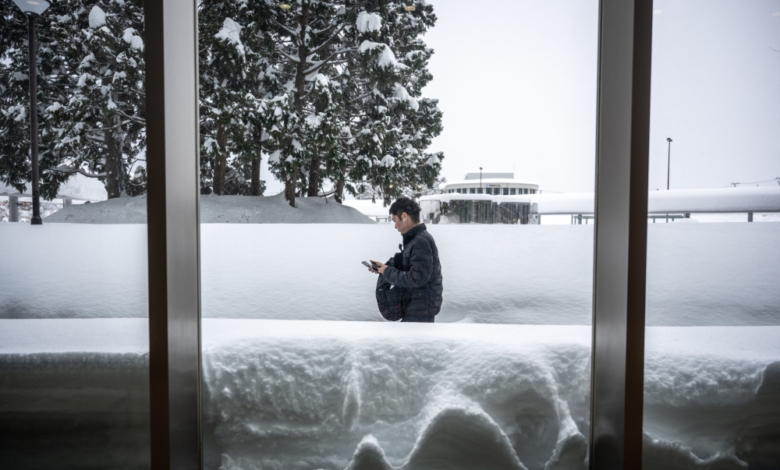

Japan has been gripped by severe weather for the past two weeks, with heavy snowfall killing at least 30 people, government officials announced Tuesday. This tragic toll comes as local and central authorities struggle to cope with record snow accumulations that have battered the country's northern and coastal regions.
Details of the victims and affected areas
The Japanese Fire and Disaster Management Agency reported that the 30 deaths, recorded between January 20 and Tuesday, were directly related to snowstorms. Among the tragic stories that shocked the public was the discovery of the body of 91-year-old Kina Jin, buried under a three-meter-high pile of snow outside her home in Ajigasawa City, Aomori Prefecture.
Local police reported that the victim died of asphyxiation after being struck by large chunks of snow that fell from her roof. An aluminum shovel was found near her body, suggesting she had been attempting to remove the accumulated snow. Authorities warned that rising daytime temperatures are causing partial melting of snow on rooftops, creating dangerous "hazardous zones" around homes.
Government mobilization and military intervention
In a swift response to the crisis, the Cabinet convened an emergency meeting to direct all relevant ministries to exert maximum effort to prevent further casualties and accidents. The central government also responded to a request from Aomori Prefecture Governor Soichiro Miyashita to deploy the Self-Defense Forces (military) to provide disaster relief assistance, particularly in remote areas where snow depths reached 4.5 meters.
The military forces are currently focused on opening closed roads and helping elderly people who live alone to remove snow, as this demographic group makes up the largest proportion of victims in rural areas.
Geographical and climatic context: Why does the disaster keep recurring?
The areas along the coast of the Sea of Japan are known for a unique climatic phenomenon that makes them among the snowiest regions in the world. This occurs when cold, dry air masses from Siberia pass over the relatively warm waters of the Sea of Japan, becoming saturated with moisture before colliding with the towering Japanese mountains and releasing their load as heavy snowfall.
Although Japan is accustomed to such weather, recent climate changes have led to sharp fluctuations, with some areas experiencing more than double the usual amount of snow this season, putting enormous pressure on infrastructure and leading to the cancellation of thousands of flights and disruption of train services.
Challenges of population aging
This event highlights a profound social challenge in Japan: the aging population, particularly in rural prefectures like Aomori and Niigata. Many elderly people live alone in traditional houses that require constant maintenance and manual snow removal—a strenuous and dangerous task that results in dozens of deaths annually, either from accidents or heart attacks caused by the physical strain of freezing temperatures.