Wadi Hanifa: The cradle of the first Saudi state and the historical artery of Diriyah

The modern history of the Arabian Peninsula cannot be read without pausing at length to consider Wadi Hanifa, a geographical landmark that transcended its role as a mere waterway to become a lifeline and a stage for events that reshaped the region. The valley is inextricably linked to the history of the Saudi state ; on its fertile banks, the foundations were laid for Diriyah, which later became the cradle of the Saudi entity and its first capital. Its archaeological sites still bear witness today to the depth of this historical connection.
Strategic location and historical depth
Wadi Hanifa is one of the most important and famous valleys in the Arabian Peninsula, occupying a strategic location in the Yamamah region. Formerly known as Wadi al-Ardh, the valley's course cuts through the Najd plateau from the edge of the Tuwaiq Mountains in the north towards the south, forming a natural attraction for human settlement for thousands of years. The valley was not merely a settlement for people, but also a major and vital station in the heart of the Arabian Peninsula for pilgrimage and trade caravans coming from the east and west, thus giving it significant economic and political importance throughout the ages.
A fertile environment and unique plant diversity
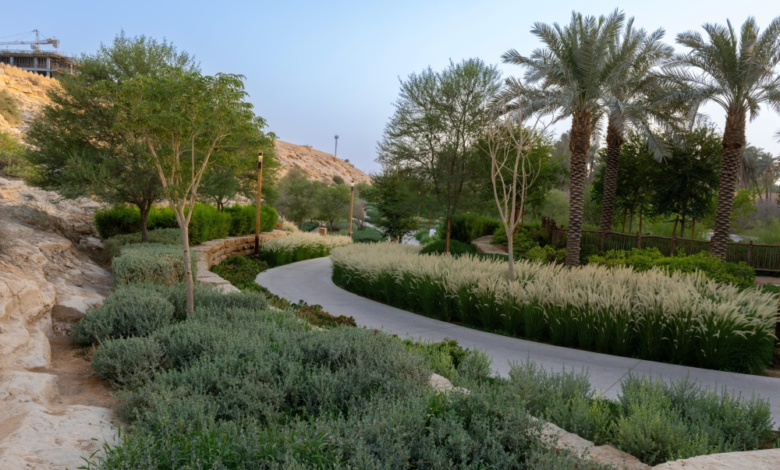
What distinguishes Wadi Hanifa is its fertile environment, an exception in the heart of the harsh desert. The valley's high humidity and close groundwater level have fostered a dense and diverse vegetation cover. Communities of perennial trees, such as acacia and jujube, are concentrated along the valley's banks and the edges of its channels, while annual plants and shrubs thrive in the valley floor and surrounding areas. This ecological diversity provided essential resources for the tribes that settled the region, most notably the Banu Hanifa, who gave the valley its current name. They practiced agriculture and herding, taking advantage of the fertile soil and abundant water.
Water resource and lifeline
Wadi Hanifa serves as a natural drainage basin for surface water and flash floods, covering an area of approximately 4,590 square kilometers. The wadi is fed by a vast network of tributaries and streams, most notably Wadi Al-Aysan, Wadi Al-Watar (Al-Bathaa), Wadi Al-Amariya, Wadi Safar, Wadi Mahdiya, Wadi Wabr, Wadi Laban, and Wadi Nimar. This complex water network has made the wadi a strategic water reservoir, enabling the inhabitants to establish a stable agricultural civilization and build villages and towns along its course, forming the nucleus of a thriving urban community.
From the arrival of "Al-Muridi" to the founding of the state
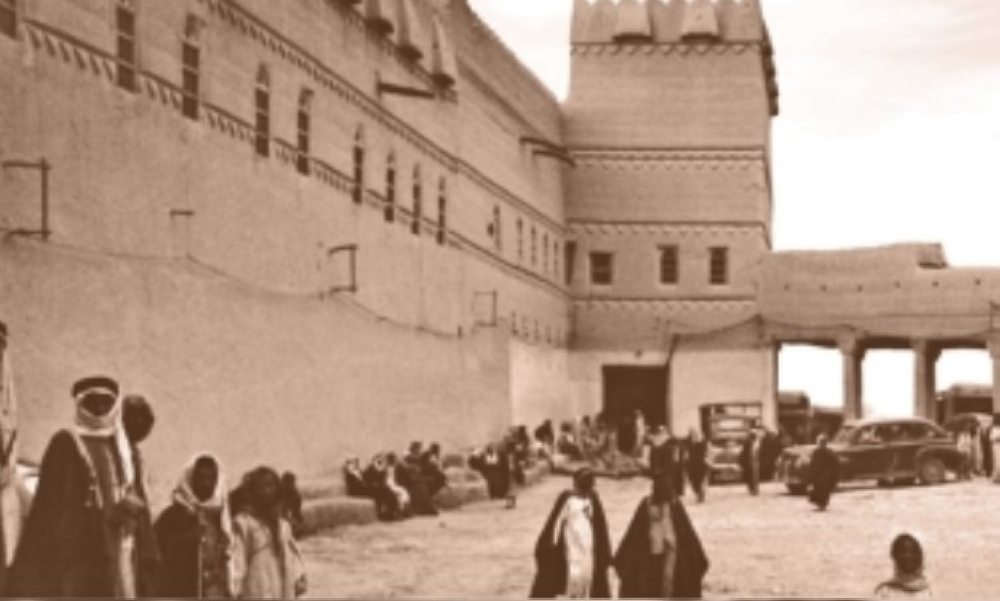
The political significance of Wadi Hanifa lies in its role as the birthplace of the Saudi state. In 850 AH/1446 CE, Prince Mani' ibn Rabi'ah al-Muraydi and his tribe migrated from eastern Arabia at the invitation of his cousin, Ibn Dara', settling in this fertile valley and founding Diriyah. This establishment laid the foundation for a major Arab state.
Over time, Diriyah grew and its influence expanded thanks to its fortified location and the economic resources provided by the valley. In mid-1139 AH (corresponding to February 22, 1127 CE), this historical trajectory culminated in the accession of Imam Muhammad bin Saud, who established Diriyah as the capital of the First Saudi State. Since then, Wadi Hanifa has become a symbol of resilience and unity, a testament to the rise of the state that unified most of the Arabian Peninsula, and it remains today a historical and environmental landmark that tells generations the story of struggle and development.