The Houthis' position: aligning with Iran and avoiding a declaration of all-out war

Introduction: The Houthi balancing strategy in light of regional tensions
The political and security landscape in the Middle East is witnessing rapid developments, with the Houthi movement in Yemen emerging as a key factor influencing these dynamics. Amid escalating regional tensions, it is clear that the Houthis are aligned with Iran strategically and ideologically, yet simultaneously avoiding a full-scale, open regional war. This complex stance reflects a carefully crafted strategy aimed at achieving political and military gains without incurring the catastrophic consequences of a direct, large-scale confrontation that could threaten the group's local control.
General context and historical background of the Houthi-Iranian alliance
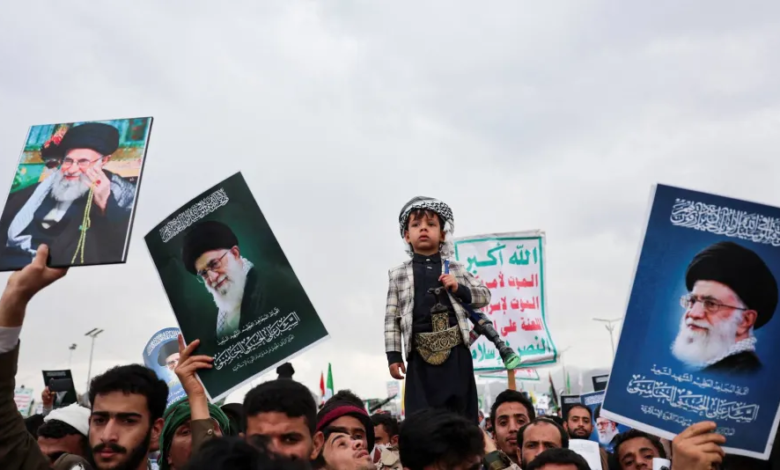
To understand this situation, it is necessary to consider the broader context and historical background of the relationship between the Houthi movement (Ansar Allah) and the Islamic Republic of Iran. The roots of this alliance stretch back years, specifically to the Saada Wars, and it deepened considerably after the Houthis seized control of the Yemeni capital, Sana'a, in late 2014. Iran considers the Houthis a key component of what it calls the "Axis of Resistance," a regional alliance comprising armed groups in several Arab countries. Tehran has provided the group with substantial political, media, and military support, enabling it to develop its arsenal of ballistic missiles and drones. This has shifted the balance of power in the Yemeni conflict and established the Houthis as a regional force that cannot be ignored.
A policy of calculated escalation and avoiding open war
Despite this clear alignment and strategic dependence on the Tehran axis, observers note that the Houthi group adopts a policy of “calculated escalation.” It carries out targeted military operations, such as targeting ships in the Red Sea and the Bab al-Mandab Strait, and launching drones at specific targets. However, the group avoids declaring all-out war or open confrontation with major powers. This strategy aligns with the Iranian perspective, which prefers using allies to pressure adversaries and deliver strong political messages, without slipping into a direct war that could threaten the survival of the Iranian regime or end the Houthis’ control over their areas of influence in Yemen.
The local impact on the Yemeni scene and the peace process
Domestically, this situation has profound implications for the Yemeni landscape. On the one hand, the Houthi group is exploiting these regional tensions to consolidate its internal control and mobilize Yemeni public opinion under the banner of confronting foreign interference. On the other hand, this escalation complicates UN-led peace efforts to end the years-long Yemeni civil war. Furthermore, the continued state of “neither war nor peace” exacerbates the humanitarian and economic crisis facing millions of Yemenis, hindering development efforts and diminishing the prospects for a comprehensive and sustainable political settlement.
Regional and international repercussions of the Red Sea crisis
Regionally and internationally, the Houthis' actions are of paramount importance given Yemen's strategic location overlooking one of the world's most vital waterways. Targeting shipping in the Red Sea has disrupted global supply chains and driven up shipping and insurance costs, prompting major powers like the United States and Britain to form naval coalitions and launch limited airstrikes against Houthi targets. This situation has placed the entire region on a knife's edge, with the international community fearing that any miscalculation could ignite a wider regional war, potentially drawing in multiple international and regional actors and threatening global energy security and the stability of the Middle East.
Summary of the strategic position
In conclusion, the Houthis' alignment with Iran and their avoidance of all-out war represent a delicate and risky balancing act. It is a strategy aimed at projecting power and asserting regional influence while maintaining fallback positions to prevent a complete collapse. As tensions persist, the future of this stance remains contingent on developments on the ground and in the political arena, and on the ability of the various actors to manage crises before they spiral out of control.