Houthi leader hints at Iranian military support: repercussions of escalation

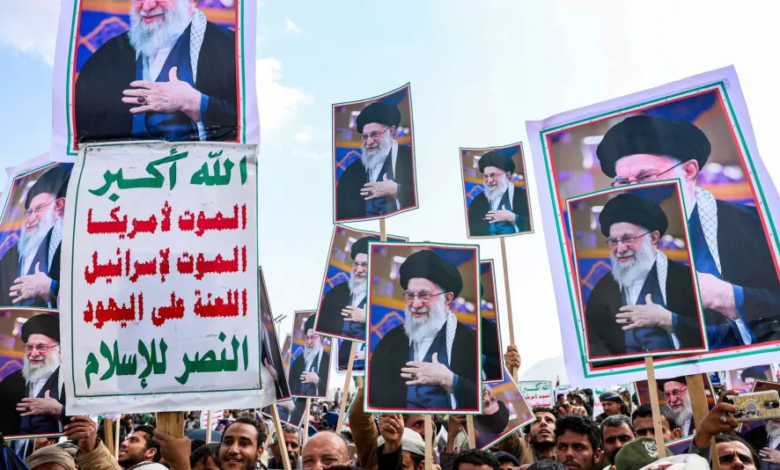
In a striking development reflecting escalating tensions in the Middle East, the leader of the Houthi movement in Yemen, Abdul-Malik al-Houthi, hinted at his group's readiness to engage directly in any military confrontation Iran might wage, emphasizing their shared path and destiny within what is known as the "axis of resistance." These hints come at a time of unprecedented political and military turmoil in the region, raising international concerns about the conflict expanding to encompass multiple fronts.
General context: Unity of the squares and the axis of resistance
The Houthi leader's statements cannot be interpreted in isolation from the strategic doctrine adopted by the factions allied with Tehran in the region. For years, Iran and its allies in Lebanon (Hezbollah), Iraq, Yemen, Syria, and Palestine have been working to solidify the concept of "unity of arenas." This concept means that any existential threat to one party within this axis could trigger a collective response from the others. The Houthi group (Ansar Allah) considers itself an integral part of this system, and it has demonstrated this in practice through its recent military operations, which it has linked to the events unfolding in the Gaza Strip.
Historical background and military capabilities
Since the Houthis seized control of the Yemeni capital, Sana'a, in 2014, their relationship with Tehran has evolved significantly, shifting from political support to military and logistical cooperation. During the years of war in Yemen, the group has developed a military arsenal that includes long-range ballistic missiles and explosive-laden drones, capable of reaching vital targets deep within neighboring countries and even targeting ships in international waterways. These capabilities make the Houthis' threats a genuine bargaining chip, not merely media posturing, especially given their previous attacks on oil facilities and airports in the region.
Strategic importance and impact of the event
This threat of war is of paramount importance given Yemen's strategic location overlooking the Bab el-Mandeb Strait, one of the most vital waterways for global trade and energy transport. Any military escalation involving the Houthis poses a direct threat to maritime traffic in the Red Sea, as has already occurred recently, leading to the formation of international coalitions to protect shipping. Expanding the war to include Yemen as a proxy for Iran will undoubtedly complicate the security landscape, increase maritime insurance costs, and potentially impact global oil prices.
Expected international and regional repercussions
Internationally, these threats present the United States and its Western allies with significant challenges as they seek to contain the conflict and prevent it from escalating into a full-blown regional war. Regionally, neighboring countries are watching these pronouncements with extreme caution, fearing that any open confrontation could undermine the fragile peace efforts in Yemen and reignite internal conflicts, threatening the security and stability of the entire Arabian Peninsula. The Houthis' involvement in an open war alongside Iran could fundamentally alter the rules of engagement and keep the entire region on a knife's edge for an extended period.