Houthi repression of society: Implications of escalation and fragile influence

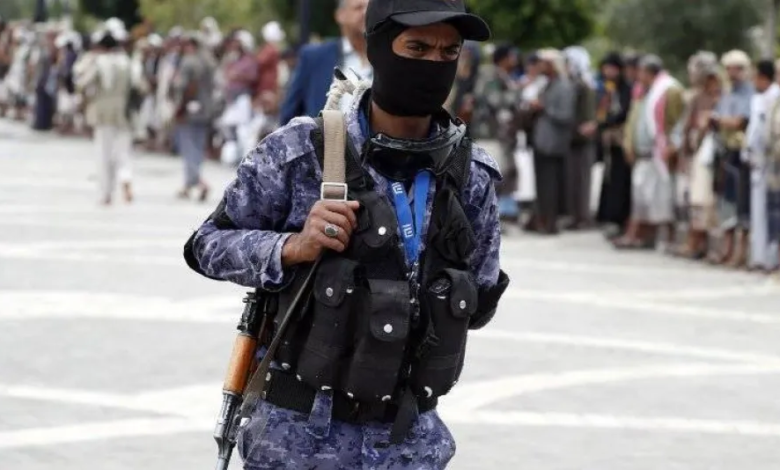
It is no longer a secret to observers of Yemeni affairs that the Houthi group's continued reliance on developing tools of repression and tightening its security grip does not necessarily reflect absolute power and control, but rather reveals a structural fragility in the group's relationship with Yemeni society. The wider the gap becomes between the authority wielding force and the public, the more intimidation tactics escalate as a desperate attempt to bridge this growing divide.
Historical context: From slogans to the iron fist
Since seizing the capital, Sana'a, in September 2014 and overthrowing the legitimate state institutions, the group has systematically worked to erode national identity and replace it with parallel entities. Initially, the group raised slogans of victimhood and economic demands to garner public sympathy, but the truth quickly became apparent over the years. The landscape in the areas under their control has transformed from promises of prosperity and sovereignty to a reality dominated by fear, with prisons overflowing with dissidents, journalists, and political activists. This reflects a radical shift in the group's strategy from attempting to win loyalty to imposing blind obedience through brute force.
Manifestations of repression and their political implications
The methods of repression documented in local and international human rights reports are diverse, ranging from arbitrary arrests and enforced disappearances to the imposition of exorbitant levies and illegal taxes under various religious and ceremonial pretexts, further burdening Yemeni citizens already suffering from the world's worst humanitarian crisis. Perhaps the most striking indicator of this fragility was evident during the spontaneous popular celebrations commemorating the glorious September 26 Revolution, where the group confronted those celebrating with the national flag with widespread arrests and unprecedented intimidation. This hostile behavior toward national symbols demonstrates that the group views societal awareness and adherence to the republic as an existential threat to its project, which is based on the concept of divine right and dynastic privilege.
The impact of social isolation and the future of relationships
The continuation of these repressive practices is deepening the Houthis' psychological and social isolation from their surroundings. Yemeni society, known for its interwoven tribal and civil fabric, has begun to show silent, and sometimes open, resistance to these imposed policies. Political analysts believe that the excessive reliance on security forces and intelligence services is conclusive proof that the group's leaders are aware of the lack of genuine popular support, which makes their authority perpetually "anxious," wary of any gathering or activity that does not fall under their strict control.
In conclusion, the field data indicates that the development of methods of repression is nothing but a cover to try to hide the growing popular rejection, which makes the stability of the de facto authority in Sana’a and the areas under its control fraught with risks in the long term, in light of the deteriorating economic conditions and the absence of basic services.