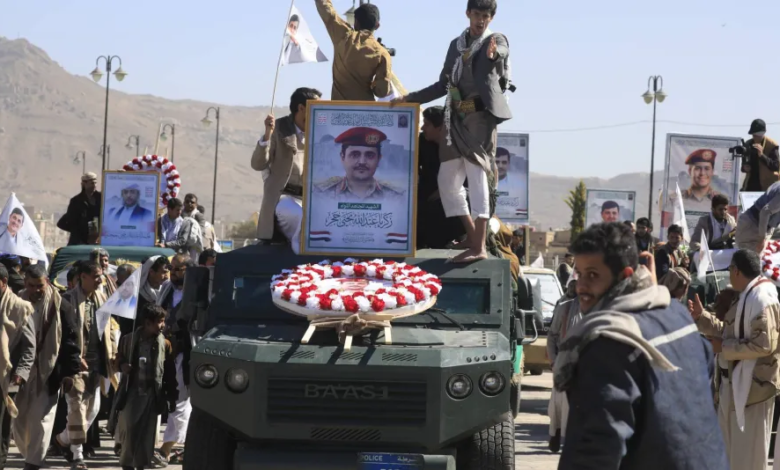

In a significant development reflecting the scale of losses suffered by the group's military leadership, the Houthis have officially acknowledged the deaths of several commanders of their drone air force, nine months after they were killed. This belated admission raises numerous questions about the reasons for the prolonged secrecy and the impact of these strikes on the group's operational capabilities amidst the ongoing escalation in the region.
The implications of timing and belated recognition
This announcement comes at a time of unprecedented tensions in the region, particularly in the Red Sea and the Bab al-Mandab Strait. Military experts suggest that the delay in announcing the deaths of leaders at this sensitive level—specifically in the drone sector, which is the spearhead of the group's operations—is likely due to security and intelligence reasons. These reasons aim to maintain the morale of the fighters and attempt to reorganize the leadership structure before announcing the vacancies in these critical positions.
The drone air force: the backbone of the Houthis' strategy
Since the start of the conflict in Yemen, the Houthis have increasingly relied on unmanned aerial vehicle (UAV) technology to compensate for their lack of conventional air power. This arsenal has evolved from simple reconnaissance drones to long-range suicide and attack drones, such as the Samad and Qasef models. The leaders managing this program are considered key strategic targets for the international coalitions opposing the group, given the pivotal role these drones play in threatening international shipping and vital infrastructure in neighboring countries.
Regional and international context and the impact of the strikes
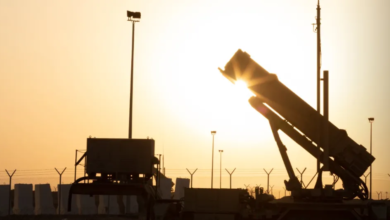
This recognition coincides with the US- and UK-led military campaign, Operation Prosperity Guardian, and other operations aimed at curtailing the Houthis' military capabilities. Observers assert that the success of airstrikes and intelligence operations in targeting top-tier leaders within the drone unit reflects either a security breach or an improvement in the accuracy of intelligence gathered by forces opposed to the Houthis.
On the ground, although the group possesses a large stockpile of drones and smuggled spare parts, the loss of field commanders and technical experts is a severe blow to the unit’s “institutional memory” and cumulative experience, which may lead to temporary confusion in planning complex operations, although it does not mean a complete cessation of attacks.
The future of the conflict in light of the targeting of leaders
Military history in irregular conflicts shows that decapitation strikes often lead to short-term escalation as a retaliatory response, but they weaken organizational cohesion in the long run. As the Houthis continue to develop their capabilities with external support, the drone program remains the most significant challenge. This implicit acknowledgment of losses indicates that an intelligence battle is being waged fiercely behind the scenes, parallel to the declared military confrontations.