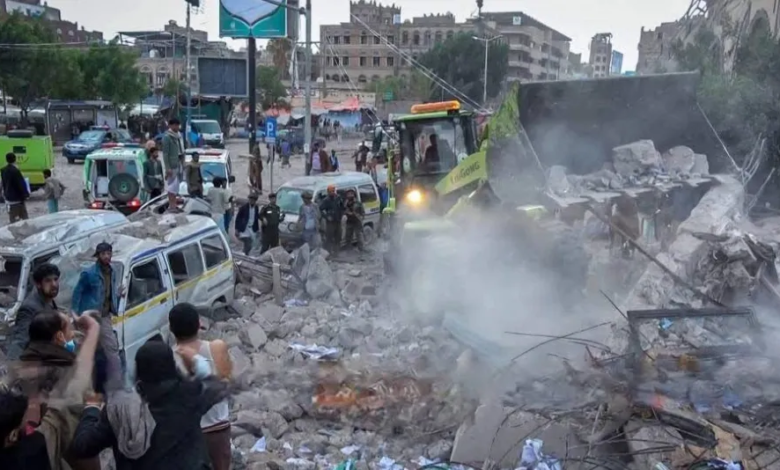
The Houthis acknowledge the death of their representative in the Iranian axis operations room

In a significant field and political development reflecting the depth of their involvement in regional conflicts, the Houthi group (Ansar Allah) in Yemen officially acknowledged the death of its military representative in what is known as the "Axis Operations Room" led by Iran. This admission highlights the advanced level of military and intelligence coordination between the group and the other parties of the "Axis of Resistance" in the region.
Background of the event: Joint Operations Room
The term “Axis Operations Room” refers to a joint command and coordination center comprising representatives from the Iranian Revolutionary Guard Corps (IRGC), Hezbollah in Lebanon, armed factions in Iraq, and the Houthis in Yemen. This room was established to unify military efforts, exchange intelligence, and implement a “unified fronts” strategy aimed at simultaneously activating multiple fronts against adversaries. The operations center is believed to move between Damascus, Beirut, and Tehran, and is frequently targeted by intelligence operations and precision airstrikes.
The Houthis' escalating regional role
The Houthis' role is no longer confined to the internal conflict in Yemen; in recent years they have transformed into an influential regional player within the Iranian strategy. This has been clearly demonstrated by the group's attacks in the Red Sea and the Bab al-Mandab Strait, as well as its launching of missiles and drones at long-range targets. The presence of a high-ranking Houthi representative in the central operations room confirms that the Houthis' military decisions have become an integral part of the broader axis's agenda, and are not merely isolated local actions.
Implications and effects of this advertisement
The acknowledgment of this leader's death carries significant strategic implications:
- First: This event confirms a security breach in operations rooms that are supposed to be highly secretive, indicating a precise intelligence penetration by parties opposed to the axis.
- Secondly: This announcement officially proves the physical presence of Houthi leaders outside Yemen to participate in managing the regional conflict, something the group had previously denied.
- Third: This targeting may lead to an escalation of tensions, as the group believes that targeting its representatives abroad warrants a military response, which may expand the circle of fire in the region to include new and vital targets.
In conclusion, the killing of the Houthi representative in the joint operations room is a moral and logistical blow, revealing the high risks faced by first-tier leaders in light of the open intelligence war currently taking place in the Middle East region.