Conditions for catering companies to provide Iftar meals during Ramadan 1447 in the Two Holy Mosques

The General Authority for the Care of the Two Holy Mosques announced the commencement of early preparations for the holy month of Ramadan 1447 AH, by opening the application process for specialized companies and factories wishing to provide Iftar (breaking the fast) services at the Two Holy Mosques. This proactive step comes within the framework of the Authority's strategy to regulate and enhance the quality of the food service system, ensuring the provision of the highest standards of service to pilgrims in accordance with the highest food safety and health standards.
Announcement details and application deadline
The Authority clarified that commercial entities, including companies and factories, are eligible to submit their documentation and qualifications to provide "Iftar services" exclusively. It noted that this procedure does not include travel permits for Iftar meals for individuals or charitable organizations at this stage, but rather focuses on service providers. The Authority specified the application period, which will begin on the 7th of Rajab 1447 AH and continue for three days until the 10th of the same month. The Authority urged all interested parties to submit their applications promptly via the designated QR code, ensuring that all regulatory requirements are met within the announced timeframe.
Technical and operational terms and conditions
The authority established a set of strict requirements to ensure the competence of applicants, including:
- Regulatory licenses: A valid commercial registration that includes the activity of catering or food services, in addition to a valid license from the Holy Capital Municipality or the Food and Drug Authority for the operating premises.
- Geographical location: A physical operational headquarters must be located within Makkah or Madinah, with proof of ownership or documented lease agreements provided.
- Health record: The facility's record must be free of any violations related to public health.
- Operational capacity: The ability to supply at least 10,000 meals per day, to ensure smooth service during peak times.
- Identity and Quality: Adherence to the project's approved visual identity and meal components specified by the authority.
Context of organizing breakfast services in the Two Holy Mosques
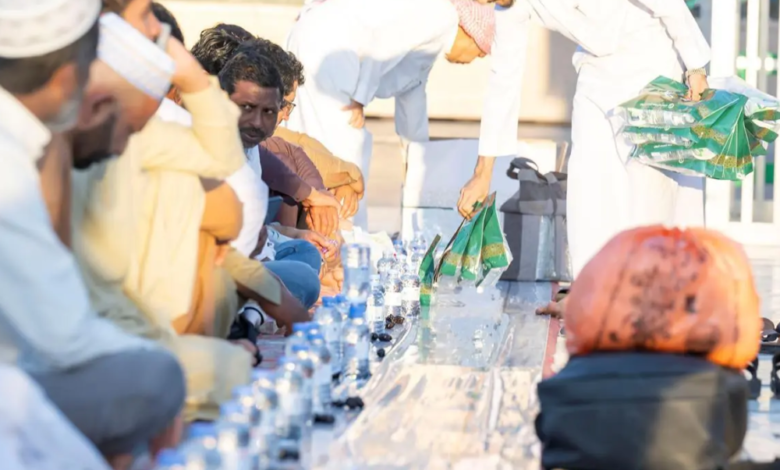
The Iftar system at the Grand Mosque in Mecca and the Prophet's Mosque in Medina is one of the largest mass feeding operations in the world, serving millions of meals in the minutes leading up to the Maghrib prayer. Historically, this service has evolved from individual and spontaneous initiatives to a well-organized, institutionalized effort overseen by the General Presidency for the Affairs of the Two Holy Mosques. This transformation aims to eliminate overcrowding, reduce food waste, and ensure the cleanliness of the courtyards and prayer areas, as the Kingdom of Saudi Arabia is committed to utilizing all available technological and logistical resources to facilitate the performance of religious rites.
The economic and health importance of the event
This announcement is of paramount importance on several levels. Economically, it opens the door for competition in the catering sector and raises quality standards, thus boosting commercial activity in Mecca and Medina. From a health and regulatory perspective, the requirement for licenses from the Food and Drug Authority and municipalities reflects the Kingdom's commitment to the safety of pilgrims and visitors, and to preventing any incidents of food poisoning or health problems that might result from unregulated food. This aligns with the goals of the Kingdom's Vision 2030 to enrich the experience of pilgrims and provide world-class services befitting the sanctity of the place and time.