Hunger queues in Yemen: The realities of the humanitarian crisis and the confiscation of Zakat funds

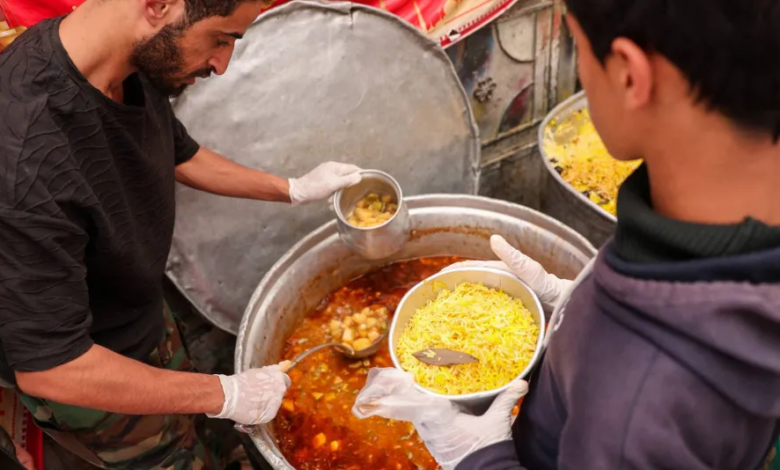
The heartbreaking scenes of long lines of hungry people in Ibb Governorate and other Houthi-controlled areas have sparked outrage and condemnation among Yemenis. These long queues reveal a rapidly deteriorating humanitarian crisis and an unprecedented collapse of social safety nets. These tragic developments come at a time when Houthi authorities are facing increasing accusations of imposing strict restrictions on charitable work and preventing the direct distribution of alms, further exacerbating the suffering of the poorest families.
Restrictions on social solidarity and confiscation of zakat
Field reports and local testimonies indicate that the worsening phenomenon of hunger queues is not solely due to resource scarcity, but is closely linked to recent actions taken by the Houthi group. The group has monopolized the distribution of zakat and sadaqah (Islamic alms) through an agency it established for this purpose, preventing merchants and philanthropists from distributing food baskets or cash assistance directly to those in need, as was customary in previous years. These policies have deprived thousands of families of essential support they relied upon for survival and have transformed charitable work into a centralized tool that often lacks equitable distribution.
The economic context and the suspension of salaries
The scenes of hunger queues in Ibb cannot be separated from the broader economic context that Yemen has been experiencing for years. In Houthi-controlled areas, government employees have gone without salaries since 2016, pushing a large segment of the middle class into extreme poverty. This coincides with the imposition of continuous taxes and customs duties on the private sector, leading to a dramatic increase in the prices of basic foodstuffs and making obtaining a loaf of bread a daily struggle for the average Yemeni citizen.
Declining international aid and the specter of famine
This crisis is taking on an alarming international dimension as international organizations, most notably the World Food Programme, reduce their humanitarian aid to Yemen due to funding shortages and restrictions on relief operations. This reduction has left millions of Yemenis with impossible choices, as foreign aid has become the only lifeline for millions of families. With the ongoing economic war and the collapse of the local currency, international observers warn that Yemen is once again on the brink of a famine that could be the worst in modern history if the situation is not addressed and restrictions on humanitarian and charitable work are not lifted.