Breaking the fast at the Grand Mosque: A scene of faith embodying Islamic unity

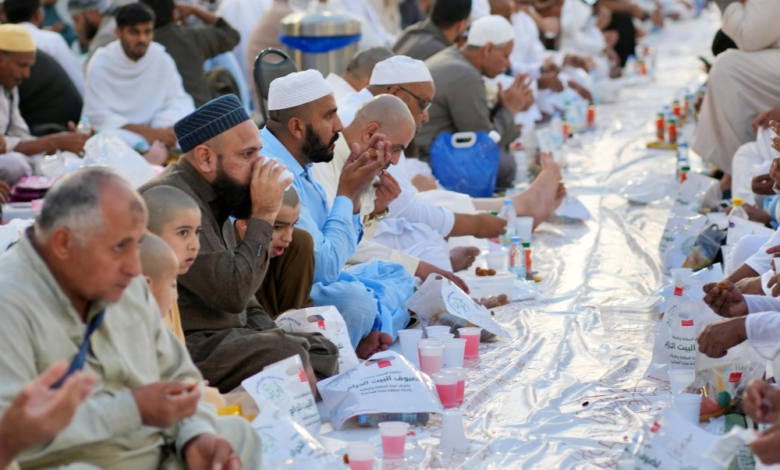
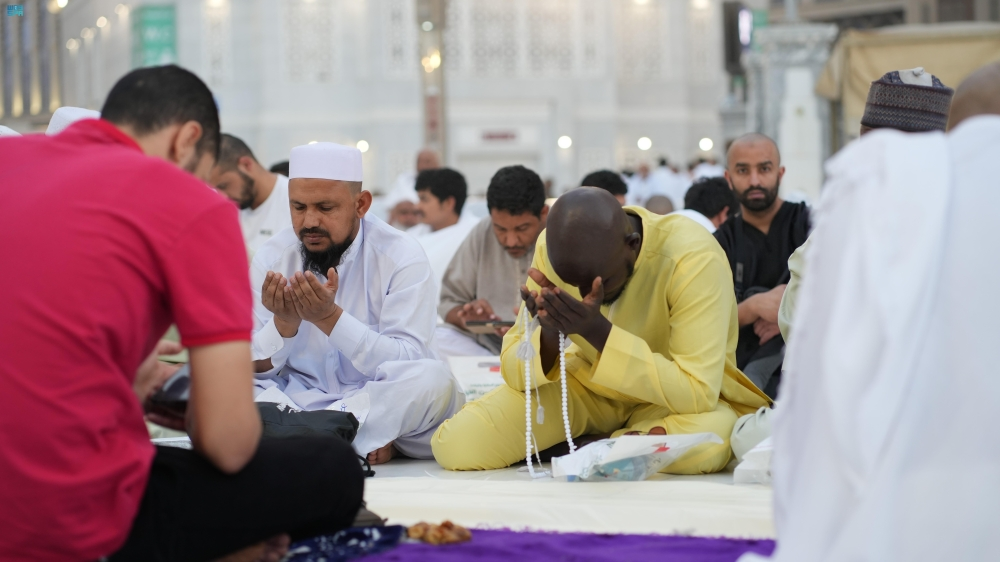
As the sun sets each day of the holy month of Ramadan, the Grand Mosque in Mecca transforms into a global destination, embodying the highest ideals of humanity and spirituality. The scene extends beyond the performance of rituals to include the communal iftar meals, creating a unique spectacle where hundreds of thousands of fasting Muslims from all corners of the earth, representing diverse languages, colors, and cultures, gather around a single table in a display that reflects the essence of Islam.
Spiritual atmosphere before the Maghrib prayer
The moments before the Maghrib prayer call at the Grand Mosque in Mecca are filled with a profound tranquility, as tongues utter supplications and hearts are filled with reverence, awaiting the breaking of the fast. Meanwhile, the communal iftar tables (tables of mercy) are laid out across the courtyards and arcades of the Grand Mosque, meticulously organized to reflect the harmony between volunteers, staff, and pilgrims. Class and social distinctions vanish completely, as the rich sit beside the poor, and Arabs sit beside non-Arabs, sharing dates, Zamzam water, and Arabic coffee, embodying the concept of "one body" as emphasized by the Prophet Muhammad.
A historical legacy of "Al-Rifada" and "Al-Saqaya"
The tradition of breaking the fast at the Grand Mosque in Mecca is not a recent phenomenon, but rather an extension of a long-standing historical legacy in Mecca, embodied in the practices of "Rifada" and "Siqaya," which involve serving and feeding pilgrims and Umrah performers. Today, this concept has evolved into an institutional system overseen by relevant authorities, where the people of Mecca and philanthropists compete to offer the finest dates and permitted foods, hoping for the immense reward associated with providing Iftar for those fasting in this holy place, and during this blessed month in which good deeds are multiplied.
A highly precise logistics services system
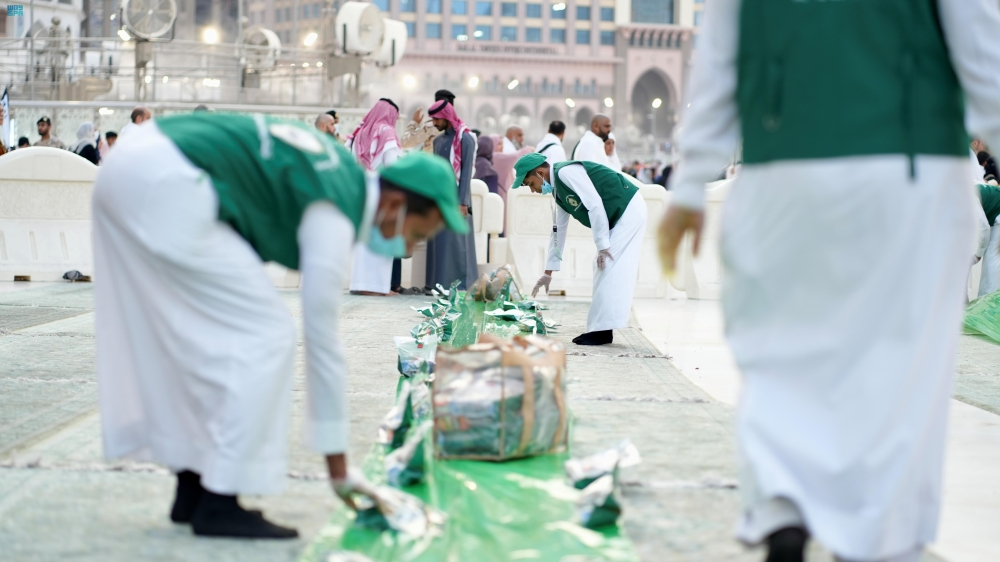
From an organizational standpoint, the Iftar meal at the Grand Mosque presents a massive logistical challenge, which the Kingdom of Saudi Arabia manages with remarkable efficiency. As soon as the call to prayer is heard, worshippers break their fast with a light meal, and within minutes, the food is removed, the entire area is thoroughly cleaned and perfumed before the prayer begins. The cleaning and service teams work tirelessly to ensure the Grand Mosque remains pristine, allowing worshippers to perform the Maghrib prayer in a healthy and clean environment. This reflects the significant advancements in crowd management and the services provided to pilgrims.
A message of peace and tolerance to the world
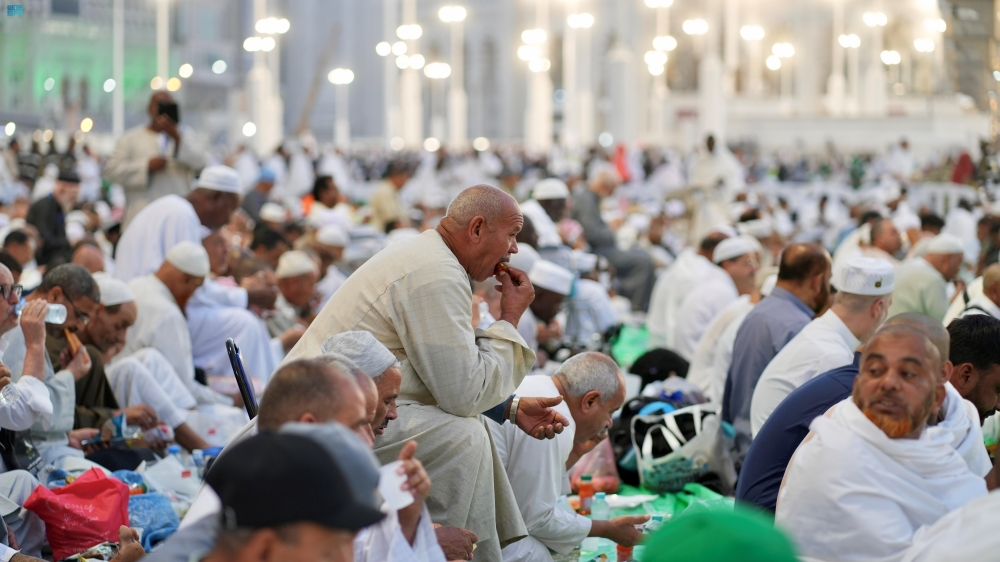
The scene of breaking the fast at the Grand Mosque in Mecca carries profound messages that transcend the physical space; it is a message of peace and tolerance directed to the entire world, affirming that Islam is a religion of mercy and coexistence. The gathering of these multitudes in order and tranquility, and their sharing of food and water, presents a refined and civilized model of upright human conduct. This daily event, repeated throughout the month of Ramadan, remains an unforgettable memory in the hearts of all those whom God has blessed to visit His Sacred House, and a living testament to the greatness of this religion and the comprehensiveness of its teachings, which unite rather than divide.