Crown Prince receives Omar Yaghi, winner of the 2025 Nobel Prize in Chemistry

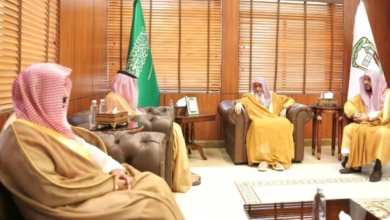
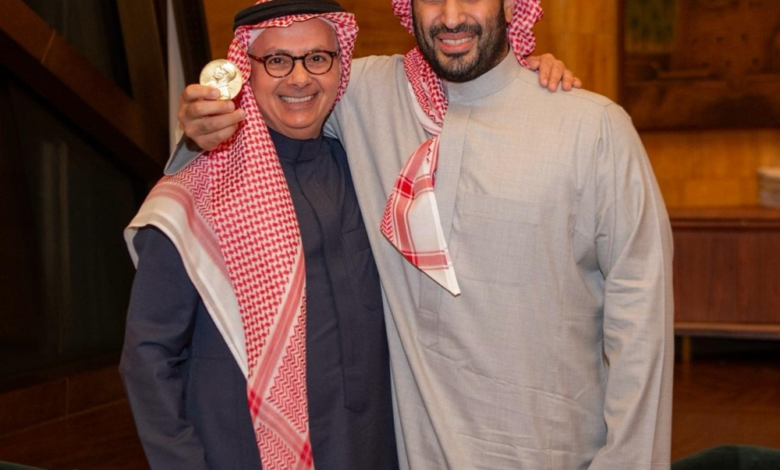
His Royal Highness Prince Mohammed bin Salman bin Abdulaziz Al Saud, Crown Prince and Prime Minister, received Professor Omar bin Munis Yaghi on the occasion of his winning the Nobel Prize in Chemistry for 2025. His Highness congratulated the great scientist on this historic achievement, which reflects global appreciation and well-deserved recognition of his exceptional efforts and pioneering research in the field of chemistry, wishing him continued success in his scientific career.
A global scientific breakthrough in retinal chemistry
Professor Omar Yaghi's Nobel Prize win is the culmination of a distinguished scientific career. Yaghi is considered the founder of the field of reticular chemistry. His research has contributed to the development of new materials known as metal-organic frameworks (MOFs) and covalent organic frameworks (COFs). These materials are characterized by their high porosity and exceptional gas storage capacity, opening up vast possibilities for clean energy solutions and environmental sustainability applications.
The importance of the event and its strategic impact
This reception holds special significance beyond mere protocol, reflecting the Saudi leadership's commitment to supporting science and scientists, and aligning with the goals of the Kingdom's Vision 2030, which focuses on innovation, research, and development. It is worth noting that Professor Omar Yaghi, an American of Arab descent, was granted Saudi citizenship by royal decree, as part of the Kingdom's strategy to attract distinguished global talent in vital and specialized fields.
Applications that serve humanity and the environment
The significance of Yaghi's discoveries lies in finding practical solutions to the world's most pressing problems. Metal-organic framework (MOF) technology is currently being used to develop technologies for capturing carbon from the atmosphere to help combat climate change, as well as to create devices capable of harvesting water from dry air in desert regions, which represents a revolutionary solution to water scarcity problems in the region and the world.
Significance of royal honor
The Crown Prince's reception of Professor Yaghi underscores the Kingdom's message to the world that it is a nurturing environment for scientists and innovators. This meeting also reinforces the position of scientific research as a cornerstone of national development, as several Saudi universities and research centers, such as King Fahd University of Petroleum and Minerals and King Abdulaziz City for Science and Technology, collaborate with Professor Yaghi on advanced research projects aimed at serving humanity.