Emergency meeting of the International Maritime Organization regarding the Strait of Hormuz crisis

Urgent international action to protect maritime navigation
The International Maritime Organization (IMO) announced on Thursday its decision to hold an emergency meeting next week, specifically on March 18 and 19, at its headquarters in London. The meeting aims to discuss the escalating threats to maritime navigation in the Middle East region, with a particular focus on the current crisis in the Strait of Hormuz . This urgent action comes in response to a formal request from six of the IMO's forty member states: the United Kingdom, Egypt, France, Morocco, Qatar, and the United Arab Emirates.
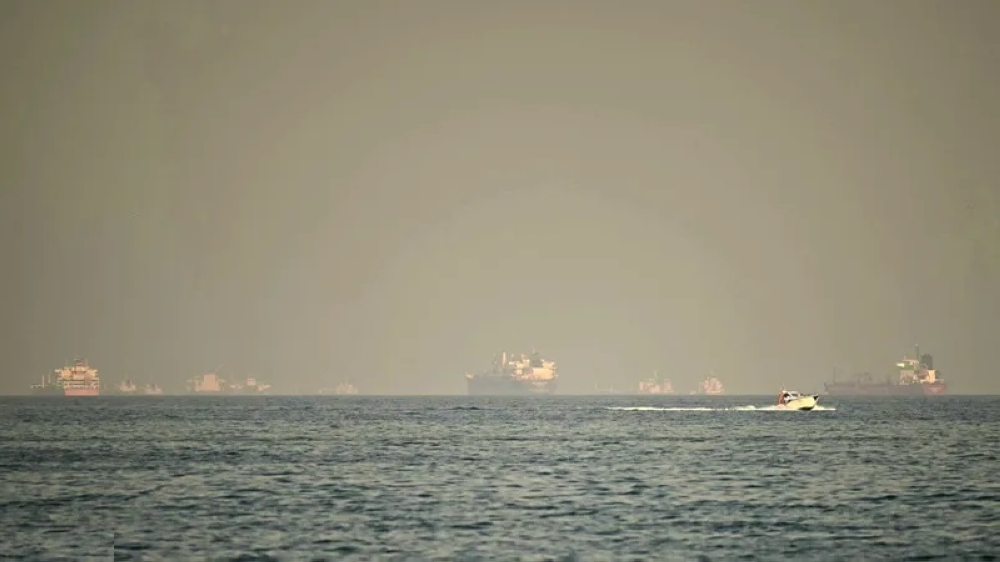
Escalating tensions and recent security incidents
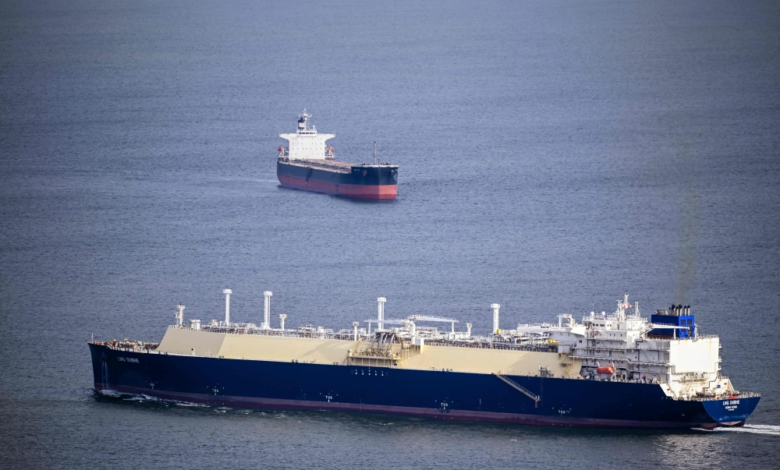
These rapid developments come amid genuine global fears of disruptions energy supplies , which could lead to a sharp and unprecedented rise in oil prices. The Strait of Hormuz, a vital artery through which roughly one-fifth of the world's daily oil consumption passes, is effectively closed due to ongoing Iranian threats. Adding to the complexity of the situation was Thursday's attack on two oil tankers off the Iraqi coast, which tragically resulted in one death and a massive fire on a commercial cargo ship struck by shrapnel.
Political stances and mutual statements
On the political front, the crisis took on more serious dimensions, with Iran's new Supreme Leader , Mojtaba Khamenei, calling for the continued use of the Strait of Hormuz as leverage to pressure the international community. In response, the United States issued a firm statement through President Donald Trump, who declared unequivocally that halting what he termed Iran's "evil empire" was a top priority, even more important than maintaining stable global oil prices.
The strategic and historical importance of the Strait of Hormuz
Historically, the Strait of Hormuz has never been just an ordinary waterway; it is a strategic chokepoint separating the Persian Gulf from the Gulf of Oman and the Arabian Sea. At its narrowest point, the strait is only about 21 nautical miles wide, making it easily vulnerable to military threats. Over the decades, the strait has witnessed numerous tensions, most notably during the "Tanker War" of the 1980s, when the international community recognized that any disruption to freedom of navigation in this waterway would directly cripple the global economy. The daily passage of millions of barrels of crude oil, condensate, and petroleum products makes the security of the strait a shared international responsibility, not limited to the countries of the region alone.
Economic repercussions and the role of the International Maritime Organization
Economically, any disruption to shipping in the Strait of Hormuz would immediately impact financial and energy markets, driving up marine insurance costs and fueling inflation in global commodity prices. This underscores the pivotal role of the International Maritime Organization (IMO), a United Nations agency established to ensure the safety and security of international shipping. The IMO's intervention at this critical juncture reflects the gravity of the situation, as it seeks to unify diplomatic and legal efforts to guarantee that international waterways remain open and safe for all, and to prevent the region from sliding into open military conflict that could cost the global economy trillions of dollars.