Iftar and Suhoor times for the 6th of Ramadan in Saudi Arabia: A comprehensive schedule

With the dawn of a new day in the holy month, those fasting in Saudi Arabia are keen to know times for breaking their fast and beginning the fast , ensuring they perform their religious duties at the prescribed times. Today, Monday, the sixth day of Ramadan, all eyes turn to the sky and official timekeeping systems to await the sunset and the breaking of the fast, as well as to determine the time for beginning the fast before the Fajr prayer.
Prayer times in the cities of the Kingdom for the sixth day of Ramadan
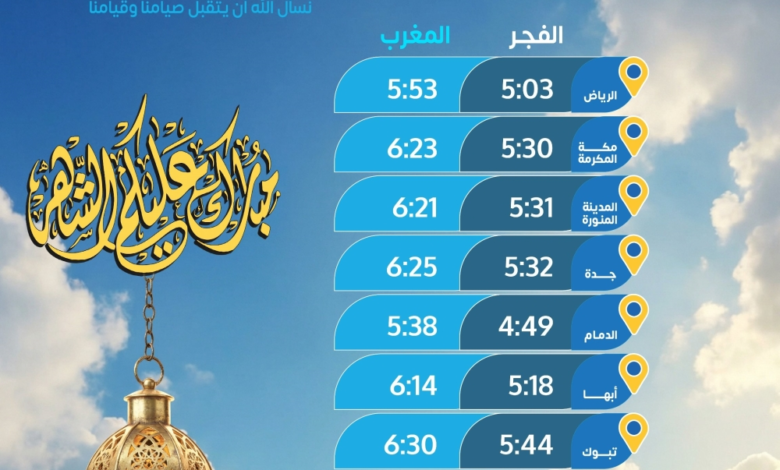
Prayer times vary from city to city based on geographical location. Below is a detailed list of Fajr (Imsak) and Maghrib (Iftar) prayer times for Monday, the 6th of Ramadan, in the major cities of the Kingdom:
- Riyadh: Fajr 5:03 AM - Maghrib 5:53 PM.
- Mecca: Fajr 5:30 AM - Maghrib 6:23 PM.
- Medina: Fajr 5:31 AM - Maghrib 6:21 PM.
- Jeddah: Fajr 5:32 AM - Maghrib 6:25 PM.
- Dammam: Fajr 4:49 AM - Maghrib 5:38 PM.
- Abha: Fajr 5:18 AM - Maghrib 6:14 PM.
- Tabuk: Fajr 5:44 AM - Maghrib 6:30 PM.
- Buraidah: Fajr 5:14 AM - Maghrib 6:02 PM.
- Hail: Fajr 5:23 AM - Maghrib 6:10 PM.
- Al-Baha: Fajr 5:23 AM - Maghrib 6:17 PM.
- Arar: Dawn 5:26 AM - Sunset 6:10 PM.
- Sakaka: Fajr 5:29 AM – Maghrib 6:14 PM.
- Jazan: Fajr 5:17 AM - Maghrib 6:15 PM.
- Najran: Fajr 5:11 AM - Maghrib 6:07 PM.
Geographical diversity and time zone differences in the Kingdom
The variation in prayer times across the Kingdom's cities reflects the vast geographical expanse of Saudi Arabia, which stretches across large areas of the Arabian Peninsula. While residents of the Eastern Province (such as Dammam) break their fast first, the time for breaking the fast in the western and northwestern regions (such as Tabuk) is delayed by up to an hour. This diversity adds a unique character to the Ramadan atmosphere in the Kingdom, where the call to prayer echoes from east to west.
Spiritual atmosphere and official preparations
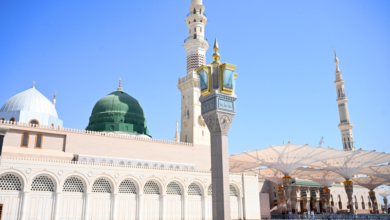
This day coincides with a period of heightened spirituality in the Kingdom, particularly in the Two Holy Mosques in Mecca and Medina, where pilgrims and visitors flock to perform the rituals and Taraweeh prayers. In a related context, relevant authorities, such as the National Center for Meteorology and all service sectors, are working to enhance their preparedness to ensure the comfort of those fasting and pilgrims, and are monitoring weather conditions to provide necessary advice to those fasting to avoid exhaustion during the daytime.
The importance of accuracy in timing
Adhering to the prescribed times for fasting and breaking the fast is essential for a valid fast, as Muslims abstain from food and drink from true dawn until sunset. Experts and scholars consistently advise following the official calendar (Umm al-Qura calendar) adopted in the Kingdom to ensure accurate timing, while taking into account the subtle time differences for residents of villages and governorates surrounding major cities.