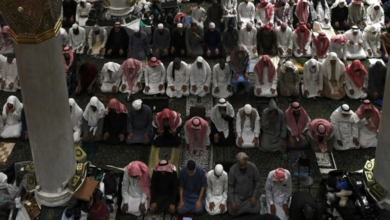

With the dawn of a new day in the holy month, Muslims in the Kingdom of Saudi Arabia welcome Thursday, the 16th of Ramadan, amidst an atmosphere of profound faith and spirituality. Those fasting and residents throughout the Kingdom are keen to accurately determine the times for beginning and ending the fast, ensuring the validity of their fast and the performance of their religious duties at their prescribed times.
Prayer and fasting times in Saudi cities
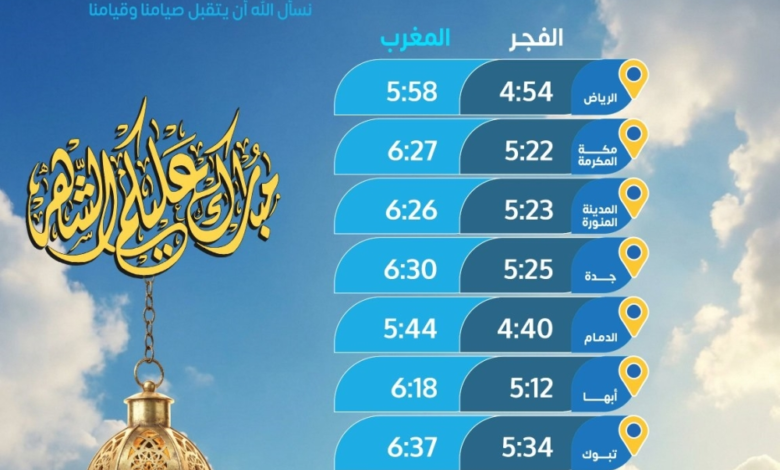
The National Center for Meteorology and relevant authorities have announced the precise times for Fajr (dawn) and Maghrib (sunset) prayers for today. These times vary depending on the geographical location of cities across the Kingdom, from east to west and north to south. Below is a detailed list of Imsak (pre-dawn) and Iftar (breaking the fast) times for major cities in the Kingdom for Thursday, the 16th of Ramadan:
- Riyadh: Imsak begins at 5:54 AM, and Iftar time is at 5:58 PM.
- Makkah Al-Mukarramah: Imsak begins at 5:22 AM, and Iftar time is at 6:27 PM.
- Madinah: Imsak begins at 5:23 AM, and Iftar time is at 6:26 PM.
- Jeddah: Imsak begins at 5:25 am, and Iftar time is at 6:30 pm.
- Dammam: Imsak begins at 4:40 AM, and Iftar time is at 5:44 PM.
- Abha: Imsak begins at 5:12 AM, and Iftar time is at 6:18 PM.
- Tabuk: Imsak begins at 5:34 AM, and Iftar time is at 6:37 PM.
- Buraidah: Imsak begins at 5:05 AM, and Iftar time is at 6:08 PM.
- Hail: Imsak begins at 5:14 AM, and Iftar time is at 6:17 PM.
- Al-Baha: Imsak begins at 5:16 AM, and Iftar time is at 6:21 PM.
- Arar: Imsak begins at 5:15 am, and Iftar time is at 6:18 pm.
- Sakaka: Imsak begins at 5:19 AM, and Iftar time is at 6:21 PM.
- Jazan: Imsak begins at 5:11 AM, and Iftar time is at 6:18 PM.
- Najran: Imsak begins at 5:05 AM, and Iftar time is at 6:11 PM.
Geographical diversity and its impact on time zones
The time difference between cities in the Kingdom reflects the country's vast geographical expanse. Residents of the Eastern Province (such as Dammam) are the first to begin their fast and the first to break it, while the time gradually decreases as one travels westward towards Mecca, Medina, and Jeddah. This gradual progression of time exemplifies the Creator's magnificence in the alternation of night and day, and necessitates that travelers between cities be mindful of these time differences to ensure a valid fast.
The spirituality of the second half of Ramadan
The 16th of Ramadan marks the end of the first half of the holy month and the beginning of the countdown to the second half, the days of forgiveness and deliverance from Hellfire. During these days, acts of worship increase, with mosques overflowing with worshippers for Taraweeh and Qiyam prayers. Everyone is keen to make the most of the remaining days of the month through acts of devotion, charity, and strengthening family ties, recognizing the virtue of this time and the special place these blessed days hold in the hearts of Muslims.
The importance of accuracy in timing
Religious and official authorities consistently emphasize the importance of relying on official calendars and trusted sources, such as the National Center for Meteorology and the Umm al-Qura calendar, to determine prayer times, especially during the holy month of Ramadan. The precise timing of the Fajr (dawn) prayer marks the beginning of the fast, and the precise timing of the Maghrib (sunset) prayer marks its end, making daily monitoring of these updates essential for every household in the Kingdom.