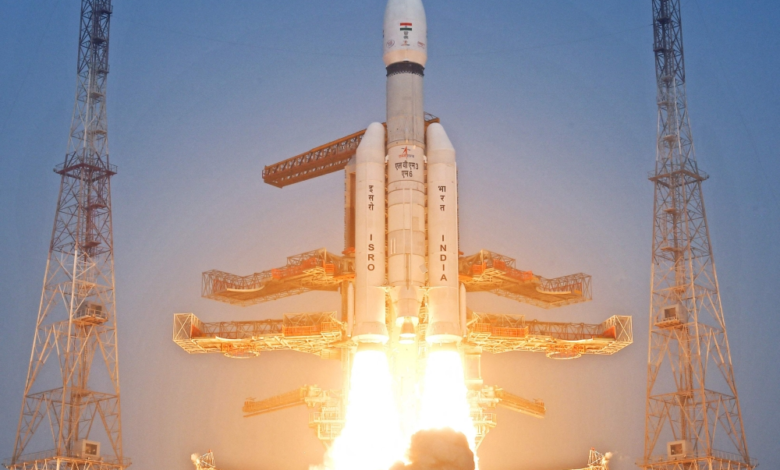
Indian satellite launch fails: Details of the PSLV-C62 mission stumbling block

The Indian Space Research Organisation (ISRO) announced on Monday the failure of its latest space mission, which aimed to place an advanced Earth-observing satellite and 15 other small spacecraft into their designated orbits. The announcement came after the launch vehicle experienced a sudden technical malfunction that prevented the mission from being completed successfully, posing a new challenge to New Delhi's growing space ambitions.
Mission details and technical glitch
The agency explained in an official statement via the X platform that the PSLV-C62 mission encountered a critical technical issue in the final stages of launch. The agency stated, "The mission experienced a malfunction at the end of its third-stage deployment, and a detailed analysis of the situation is currently underway to determine the precise causes." The rocket launched on its 64th mission at 10:18 AM local time (04:48 GMT) from the Satish Dhawan Space Centre on Sriharikota Island in southeastern India.
In a statement to national television, the head of the Indian Space Research Organisation (ISRO), V. Narayanan, confirmed that the rocket performed flawlessly as planned until the end of the third stage. He added, "At the end of the third stage, we detected turbulence, and the rocket deviated from its trajectory." Officials did not immediately provide details about the fate of the satellites, but such deviations typically result in the loss of payload or instability in the correct orbit.
Context of the Indian space program and its challenges
This incident comes at a time when India is striving to establish itself as a major global space power at a lower cost than its Western counterparts. The PSLV rocket is the backbone of India's space program, boasting a proven track record of successful launches of both domestic and international satellites. However, this failure brings to mind previous incidents, including a similar failure last May when a rocket of the same type failed to place an Earth observation satellite into orbit, suggesting technical challenges that may necessitate a thorough review of the launch systems.
Earth observation satellites are of paramount strategic importance to India, used in numerous fields including urban planning, natural disaster management, crop monitoring, and security and border applications. Therefore, any delay in deploying these satellites could impact the data schedules upon which Indian government institutions rely.
Future aspirations despite the obstacles
Despite this setback, India's space record over the past decade remains impressive. The country has achieved significant milestones, most notably placing a probe into orbit around Mars in 2014 on its first attempt—a feat unmatched by any other Asian nation. India also made history in 2023 with the successful landing of a rover on the Moon's south pole as part of the Chandrayaan-3 mission.
The Indian Space Research Organisation (ISRO) is looking to overcome this setback and move forward with its ambitious plans, which include sending astronauts into orbit independently by 2027 under the Gaganyaan program. Indian Prime Minister Narendra Modi has also announced a long-term strategic vision to send an Indian astronaut to land on the moon by 2040, as well as to establish a dedicated Indian space station.
Experts confirm that launch failures are an integral part of the development process in the space sector, and that the lessons learned from the PSLV-C62 incident will be crucial in improving the reliability of Indian rockets in the future, especially with the increasing global demand for commercial launch services offered by India at competitive prices.