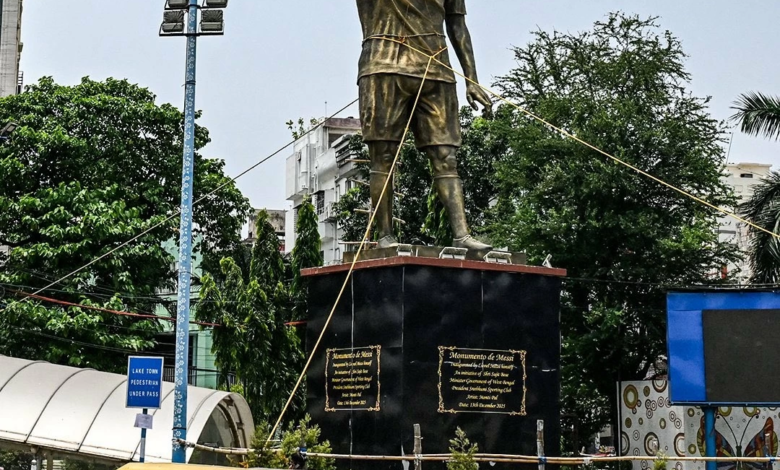

أعلنت السلطات في مدينة كولكاتا الهندية عن قرارها النهائي بشأن إزالة تمثال ميسي العملاق، الذي يبلغ ارتفاعه 21 متراً، وذلك بسبب مخاوف جدية تتعلق بالسلامة العامة. جاء هذا القرار بعد أن رُصد الهيكل الضخم وهو يتأرجح بشكل خطير بفعل الرياح، مما أثار قلق السكان المحليين والمسؤولين على حد سواء، خاصة وأن التمثال يقع في منطقة حيوية ومزدحمة.
وكان التمثال قد شُيّد في ديسمبر الماضي ليتزامن مع زيارة ترويجية قام بها الأسطورة الأرجنتينية ليونيل ميسي إلى الهند، حيث تم الكشف عنه في منطقة بحيرة تاون بكولكاتا. ويُظهر التمثال اللاعب وهو يرفع كأس العالم 2022، وقد نُصب تحت شعار “GOAT” (الأعظم في كل العصور)، كتكريم لإنجازاته التاريخية في عالم كرة القدم.
شغف كرة القدم في كولكاتا: قصة حب قديمة
تُعرف ولاية البنغال الغربية، وعاصمتها كولكاتا، بشغفها الهائل بكرة القدم، وهو شغف يتجاوز مجرد المتابعة الرياضية ليصبح جزءاً من النسيج الثقافي للمدينة. وتاريخياً، ينقسم المشجعون في كولكاتا بشكل حاد بين دعم منتخبي البرازيل والأرجنتين، وتتحول الشوارع خلال بطولات كأس العالم إلى كرنفالات من الألوان والأعلام. هذا الولع الكبير يفسر الحماس الذي رافق بناء صرح ضخم لتكريم ميسي، الذي يحظى بشعبية جارفة هناك. إلا أن هذا الشغف لم يكن كافياً لضمان بقاء التمثال في وجه عيوب التصميم ومخاطر السلامة.
من رمز للاحتفاء إلى خطر يهدد السلامة: تفاصيل قرار إزالة تمثال ميسي
أكد شارادوات موخيرجي، العضو البرلماني عن ولاية البنغال الغربية، في تصريحات لوسائل إعلام بريطانية، أن التمثال أصبح غير آمن من الناحية الهيكلية. وقال: “لقد تبين أن تمثال أسطورة كرة القدم الأرجنتينية غير آمن. لاحظنا بوضوح تأرجحه مع هبوب الرياح”. وأضاف أن عملية الإزالة لن تكون سهلة نظراً لموقعه الاستراتيجي بالقرب من طريق مزدحم ومحطة مترو، لكن السلطات ملتزمة بتفكيكه في أقرب فرصة ممكنة لحماية السلامة العامة.
الجدير بالذكر أن الزيارة التي قام بها ميسي للمدينة، والتي استمرت ثلاثة أيام، لم تخلُ من الجدل والمشكلات التنظيمية. فقد شابها أحداث عنف وارتباك كبير، مما أثار انتقادات حادة للمنظمين. ودفع العديد من المشجعين مبالغ طائلة لشراء التذاكر على أمل رؤية نجمهم المفضل عن قرب، لكنهم لم يتمكنوا من ذلك بسبب الفوضى التي سادت الحدث. وبذلك، أصبح التمثال رمزاً لتلك الزيارة “الفوضوية”، وينتهي مصيره الآن بالإزالة، ليس فقط بسبب الذكريات السلبية المرتبطة به، بل لسبب أكثر إلحاحاً وهو الخطر الحقيقي الذي بات يمثله.