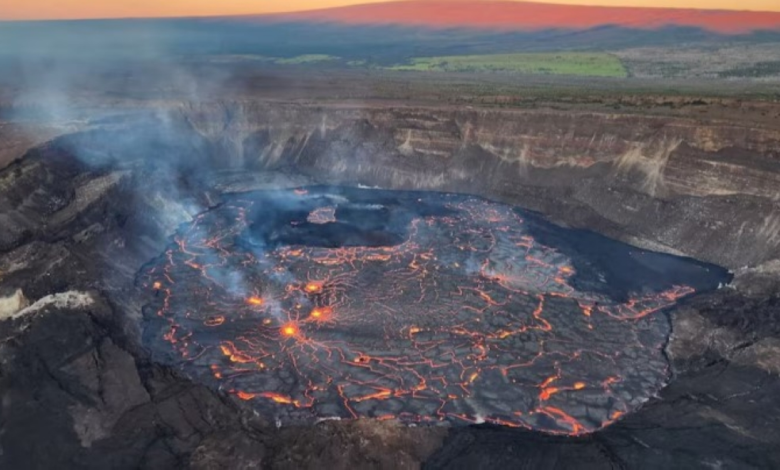

Indonesian authorities have officially raised the alert level for Mount Por Ne Tilong volcano, located in Aceh province in the far west of the country, to level two (caution level), following the detection of an escalating series of excessive activity and volcanic earthquakes that have raised concerns among geologists.
Details of increased seismic activity
In a press statement, Lana Sariya, acting head of the Geological Agency at the Ministry of Energy and Mineral Resources, explained that the stratovolcano, which rises to 2,624 meters and is located in the Pinner Meria region, experienced significant activity on Tuesday evening. At least seven tremors were recorded by monitoring equipment and felt by residents in neighboring areas up to five kilometers away. In addition, seismographs detected seven shallow volcanic tremors, 14 deep tremors, and two seismic activity, prompting an increased alert level.
Potential risks and warnings
Based on visual and instrumental monitoring confirming increased volcanic activity, scientists decided to raise the alert level. Sariya noted that aftershocks following disturbances in the Earth's crust indicate the potential for magma to be triggered. Although no significant smoke has yet been emitted from the crater, the agency warned of the possibility of a sudden eruption, including phreatic eruptions and the release of toxic and dangerous volcanic gases near active craters.
Indonesia and the Ring of Fire: A Geological Context
To understand the nature of this event, one must consider the geological context of Indonesia, an archipelago nation situated on the Pacific Ring of Fire. This region is a vast arc of geologically active fault lines encircling the Pacific Ocean basin. It is characterized by intense seismic and volcanic activity resulting from the continuous movement and collision of tectonic plates.
Indonesia alone has more than 120 active volcanoes, making it one of the most volcanically active countries in the world. While this activity is a part of daily life for the population, authorities pay close attention to any changes in volcanic behavior to prevent a repeat of past disasters. Specialized agencies work around the clock to monitor warning signs such as ground swelling, gas emissions, and frequent seismic activity to ensure the safety of communities surrounding these fiery mountains.