40 interactive screens in 50 languages to serve visitors to the Two Holy Mosques during Ramadan

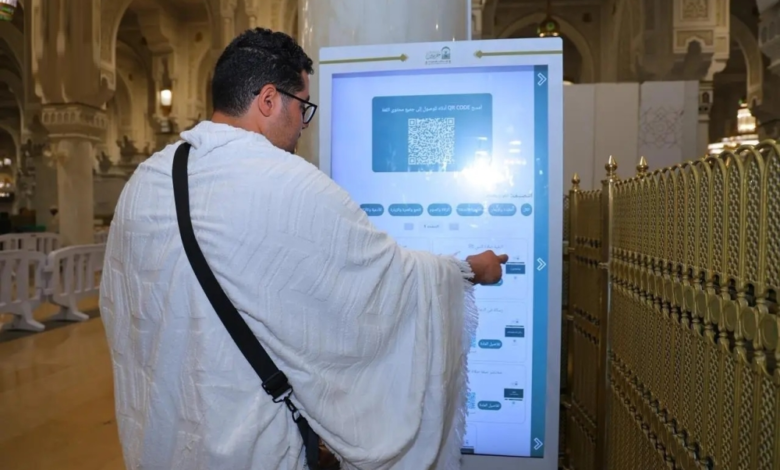
In a move reflecting the rapid technological advancements in serving pilgrims to the Grand Mosque in Mecca and the Prophet's Mosque in Medina, the General Presidency for Religious Affairs at the Grand Mosque and the Prophet's Mosque in Medina has intensified its digital and field efforts during the holy month of Ramadan. These efforts include activating a comprehensive system of over 40 interactive smart screens, operating around the clock to provide religious and guidance content in more than 50 languages, thus facilitating the performance of rituals for visitors and pilgrims with ease and tranquility.
A qualitative leap in digital services at the Two Holy Mosques
This initiative comes within the context of the significant digital transformation underway in the Kingdom of Saudi Arabia as part of Vision 2030, which places great emphasis on harnessing artificial intelligence and modern technologies to serve pilgrims. Serving the Two Holy Mosques is no longer limited to urban expansion and logistical services, but has extended to include digital infrastructure aimed at removing language barriers for the millions of Muslims who come from all corners of the earth, thus reinforcing the universal message conveyed by the Two Holy Mosques.
Strategic locations and content that promotes moderation
The Deputy Head of the Agency for Intellectual and Awareness Affairs, Sheikh Ali bin Hamed Al-Nafi’i, explained that these screens were carefully distributed in the most busy and vital locations within the Grand Mosque, including the Mataf expansion, the Saudi portico, the King Fahd expansion, and the Third Saudi expansion. These screens aim to present reliable Islamic content that promotes the values of moderation and combats extremism and foreign ideologies, in accordance with the directives of the Head of Religious Affairs at the Grand Mosque and the Prophet’s Mosque, Sheikh Dr. Abdulrahman bin Abdulaziz Al-Sudais.
Global impact and facilitation of legal rulings
The great importance of these screens lies in their ability to provide immediate and real-time religious rulings and answers to visitors in their native languages, sparing them the trouble of searching or waiting, and reducing crowding at traditional religious offices. This project is a pioneering model for using technology to serve religion, contributing to correcting misconceptions and enabling worshippers to perform their religious duties with understanding, which positively impacts their spiritual experience during the holy month.
Statistics reflect the success of the initiative
In the language of numbers, which speaks for itself, Al-Nafi'i pointed to the remarkable success of this system, noting that the number of beneficiaries of interactive services via screens has exceeded 50,000 since the beginning of Muharram, with a daily average of 250 beneficiaries. These growing figures underscore the critical need for such technological services and the Presidency's success in reaching a broad segment of the target audience, thus creating an accessible worship environment that accommodates the high population density witnessed at the Two Holy Mosques during religious seasons.