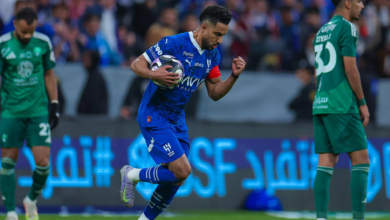

Al-Hilal secured a resounding 4-0 victory over Al-Najma in the 25th round of the Saudi Professional League. Despite this decisive win, Al-Hilal's coach, Simone Inzaghi, made realistic comments revealing a technical aspect that requires immediate attention to ensure continued success in upcoming matches.
Inzaghi assesses the performance: a solid defense and an attack that needs an early decisive move
During the post-match press conference, Inzaghi expressed his overall satisfaction with the team's performance, singling out the defensive system for praise for keeping a clean sheet. The Italian coach said, "Our team played well, and I'm happy with our defensive performance and the fact that we didn't concede any goals." However, Inzaghi didn't hide his concern about the delay in securing the victory, noting that the team took too long to extend their lead after the first goal, especially considering the opponent had been playing with a numerical disadvantage since the 39th minute of the first half.
Inzaghi emphasized that this was a "weakness" that must be addressed in the future, stating, "After scoring the first goal, we tried to extend our lead, which took too long to do, and this is something we will work to avoid in the future." This statement indicates the coach's desire to see a more aggressive attacking approach and to capitalize on opportunities to secure the victory early, thus avoiding any surprises in the final minutes.
The context of competition and the importance of offensive effectiveness
Inzaghi's comments come at a time of fierce competition in the Saudi Professional League, where attacking efficiency plays a crucial role in determining the outcome of the title race. Historically, Al-Hilal is known for its formidable attacking prowess, but squandering opportunities or delaying goals can cost the team valuable points against direct rivals. The coach's focus on addressing this aspect reflects his full awareness that big matches don't offer many chances, and that securing an early lead is key to controlling the game and conserving the players' physical energy under the pressure of a congested fixture schedule.
The star: the difference in capabilities and the shortage of numbers
For his part, Al-Najma coach Nestor El Maestro dealt realistically with the loss, attributing it to the significant technical gap between the two teams, in addition to the adverse circumstances his team faced with the early dismissal of one of its players. Nestor explained that his team tried to hold on by playing a purely defensive game to counter Al-Hilal's attacking prowess, which they were successful in doing for a while.
The Al-Najma coach added, "As time passed and the team was reduced to ten men, fatigue set in, and the players lost focus, leading to them conceding three goals in the final minutes of the match." This physical collapse in the closing stages confirms the football theory that playing with ten men against a team of Al-Hilal's caliber drains the players both physically and mentally, leaving gaps in the defense as the final whistle approaches.
Lessons learned for Al-Hilal's future
Match analysis reveals that Al-Hilal possesses a formidable attacking arsenal, but needs to improve its focus to translate its dominance into early goals. Inzaghi noted that despite numerous absences, the team displayed high concentration, emphasizing that "Al-Hilal's attack is strong at the competition level, yet it still needs improvement." This mentality, striving for footballing perfection, is what distinguishes champion teams, where the coaching staff doesn't merely focus on the numerical score but also on the quality of performance and adapting to any weaknesses, even in victory.