Iran's national team crisis regarding the 2026 World Cup and transfer negotiations to Mexico

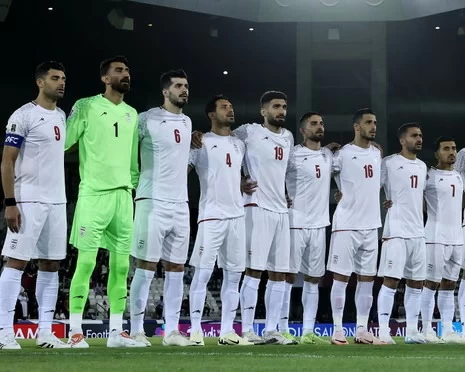
Sporting and political tensions are escalating ahead of the world's biggest football tournament, with the Iranian Football Federation facing a genuine dilemma that threatens its participation. In an unprecedented move, officials in Tehran have entered into intensive and formal negotiations with FIFA, aiming to move Iran's matches in the 2026 World Cup from the United States to Mexico. These demands stem from serious security concerns regarding the safety of players and coaching staff, given the heightened geopolitical tensions and ongoing conflicts between the United States and Iran, which have directly impacted the sporting landscape.
Trump's statements further complicate the situation
The crisis escalated following controversial statements by US President Donald Trump, in which he explicitly called for the Iranian national football team not to participate in the World Cup. Trump posted a message on his social media platform, Truth Social, saying, "We would welcome the Iranian national football team to the World Cup, but I don't think it's appropriate for them to be there for their safety and security." Tehran interpreted these statements as a veiled threat and an indication of the host country's inability to provide adequate protection for its athletes.
Iranian proposal to salvage World Cup participation
In response to these developments, the head of the Iranian Football Federation, Mehdi Taj, issued a decisive statement, relayed by the Iranian embassy in Mexico via its official Twitter account (formerly known as "X"). Taj reaffirmed his country's official position, stating, "When Trump explicitly declared that he could not guarantee the safety of the Iranian national team, we certainly would not travel to America." He then outlined the alternative plan: "We are now negotiating with FIFA for the Iranian national team to play its World Cup matches in Mexico, as the best solution to salvage our participation and ensure everyone's safety.".
The historical context of US-Iranian confrontations
Historically, sporting encounters between the United States and Iran have never been mere football matches, but have always been laden with profound political dimensions. The 1998 World Cup in France, where the two teams met in a match described as "the most politicized in football history," ended in an Iranian victory. The scenario was repeated more recently at the 2022 World Cup in Qatar, where the two teams met again in the group stage amidst intense global media coverage. This historical legacy makes the issue of the US hosting Iran's matches in 2026 a thorny one that transcends the boundaries of sports and touches upon international diplomacy, thus presenting FIFA with a difficult test in upholding the principle of separating sports from politics.
Date and format of the exceptional 2026 World Cup
It is worth noting that the 2026 FIFA World Cup represents an exceptional event in the history of football, as it will be the first time the tournament is jointly hosted by three countries: the United States, Canada, and Mexico. This historic edition will take place from June 11 to July 19, 2026. The tournament is doubly significant as it will be the first edition to feature 48 teams instead of 32, opening the door to unprecedented football diversity and increasing the logistical and organizational challenges for the host nations.
Iran's expected group in the World Cup
On a technical level, and based on the current standings, the Iranian national team is in Group G of the 2026 World Cup, a tough and competitive group that also includes Egypt, Belgium, and New Zealand. Arab and international fans are eagerly anticipating these matches, especially the potential clash between the Asian school of football, represented by Iran, and the established African school, represented by the Pharaohs, alongside the formidable European power of Belgium. The question remains: will FIFA succeed in finding a diplomatic and sporting solution to this crisis by moving the matches to Mexico, or will we witness developments that could jeopardize the participation of one of Asia's most prominent teams?