Pezeshkian: We are ready for nuclear verification, and Vance warns of red lines

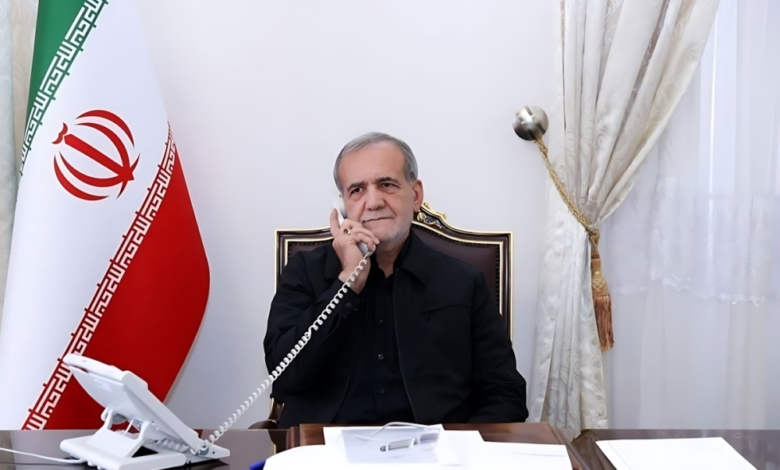
In a significant development amid strained relations between Tehran and Washington, Iranian President Masoud Pezeshkian announced his country's full readiness to allow international verification mechanisms to prove that Tehran is not seeking to acquire nuclear weapons. These statements coincided with a sensitive round of talks held in Geneva between Iranian and American officials, aimed at de-escalating tensions in the region.
Tehran's messages: Openness is conditional on verification
In remarks published on the official Iranian presidential website on Tuesday, Pezeshkian affirmed that his country's defense doctrine does not include the acquisition of nuclear weapons, stating, "We are absolutely not seeking to acquire nuclear weapons, and if anyone wants to verify this, we are ready to accept such verification procedures." This message comes as an attempt to reassure the international community and demonstrate good faith at a time when Iran is facing increasing economic and political pressure.
The American position: Adherence to red lines
On the other hand, commenting on the Geneva talks, US Vice President J.D. Vance stated that Tehran remains unwilling to fully comply with what he termed the "red lines" set by President Donald Trump. Vance indicated that the talks had made progress in some areas but encountered obstacles in other fundamental aspects.
Vance explained that the US administration prefers the diplomatic route, but he did not rule out other options, stressing that "the president is the one who has the authority to determine when diplomacy reaches its conclusion," in an implicit reference to the possibility of resorting to the military option if Iran does not respond to US demands regarding its nuclear program and regional influence.
Context of the crisis and historical background
These statements gain significance from the complex historical context of the Iranian nuclear issue, which has undergone dramatic transformations since the United States' unilateral withdrawal from the nuclear agreement (the Joint Comprehensive Plan of Action) in 2018 under President Trump, and the reimposition of crippling sanctions as part of its "maximum pressure" policy. Tehran responded by reducing its nuclear commitments and increasing uranium enrichment levels, bringing it technically closer to the nuclear threshold and raising concerns in the West and Israel.
Regional and international repercussions of the situation
Observers view the Geneva talks and Pezeshkian's statements as a possible last chance to avert open conflict in the Middle East. Failure to reach an agreement could lead to a nuclear arms race in the region and increase the likelihood of military strikes against Iranian facilities—a scenario that could drag the entire region into a wider war affecting global energy supplies and the stability of the international economy.