Iran's participation in the 2026 World Cup is threatened: Mehdi Taj's statements

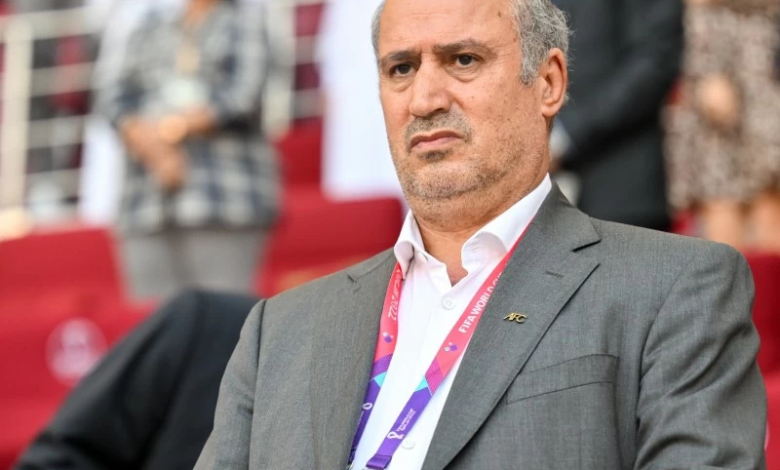
Escalating geopolitical tensions have cast a dark shadow over the global sporting landscape, casting doubt on the Iranian national football team's participation in the 2026 World Cup finals, despite their official qualification. Mehdi Taj, president of the Iranian Football Federation, made a startling revelation in official televised remarks, hinting at the possibility of "Team Melli" (the Iranian national team) missing the global tournament scheduled to be held in North America.
Fiery statements amid a political crisis
Speaking on Iranian state television, Mehdi Taj directly linked the recent military escalation to sporting decisions, indicating that the latest attack by the United States had completely altered the calculations. Taj stated unequivocally, "With what happened in the attack, it is unlikely we can think about the World Cup at the moment, but the final decision rests with the country's top sports and political officials." These remarks place FIFA in a difficult position, blurring the lines between sporting commitments and international disputes.
Match schedule: Heated clashes on American soil
Complicating matters further is the match schedule, which requires the Iranian national team to play all its group stage matches in the United States, Tehran's traditional political adversary. According to the announced schedule, Iran faces tough matches:
- June 15: Facing New Zealand in Los Angeles.
- June 21: Belgium meeting in Los Angeles.
- June 26: A highly anticipated match against Egypt in Seattle.
This geographical concentration of matches poses enormous logistical and security challenges that go beyond mere sporting competition within the green rectangle.
Historical context and visa challenges
Historically, confrontations between Iran and the United States have always been extremely sensitive, from the 1998 World Cup match in France, described as the "mother of all matches," to their encounter in the 2022 Qatar World Cup. However, the 2026 edition is radically different, as the United States is the host country, which means that the Iranian delegation must obtain special entry visas and security approvals.
Observers believe that holding the games in Los Angeles and Seattle could pose a significant obstacle given the current diplomatic rift and tensions, as the issue of visas could be used as a tool for political pressure, or Tehran might decide to boycott as a protest message, as Taj hinted.
Expected impact and FIFA's stance
So far, FIFA has remained silent and has not issued any official decision regarding the Iranian national team's status. However, all scenarios remain open, including moving Iran's matches to another co-host country (such as Canada or Mexico) as a compromise, or the worst-case scenario of Iran withdrawing and being replaced by another team according to Asian qualifying regulations. The situation remains unclear, pending the outcome of diplomatic efforts in the coming days that might salvage the participation of one of Asia's strongest teams in the World Cup.