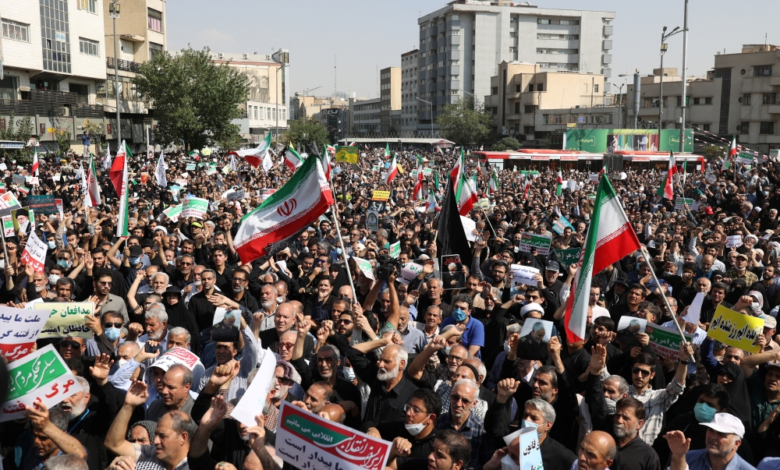

The Iranian scene witnessed a dangerous escalation in the pace of popular protests, with violent clashes between demonstrators and security forces leaving six dead in various parts of Iran on Thursday, according to local media reports. This marks the first such development in terms of casualties since the outbreak of the protest movement against the high cost of living and deteriorating economic conditions five days ago.
Arrests in Tehran and charges of disrupting public order
In Tehran, specifically in the Malard district west of the city, security forces acted decisively. The Iranian news agency Tasnim reported the arrest of 30 people on Wednesday night. The detainees were charged with "disturbing public order" and "attempting to destabilize the country," with authorities stating that the arrests followed careful surveillance and joint coordination between security and intelligence agencies to identify those involved in the protests.
Deadly clashes in Lordegan and Kuhdasht
In a tense development, the official Fars News Agency reported that two people were killed in Lordegan, a city of approximately 40,000 inhabitants located 650 kilometers from the capital, in southwestern Iran. The agency stated that the protests there turned violent, with demonstrators throwing stones at government buildings, including the governor's office, the municipality building, the Martyrs Foundation, and several banks. Police used tear gas to disperse the crowds, resulting in injuries and significant damage to public property.
In the west of the country, specifically in the city of Kuhdasht in Lorestan province, the death toll rose with three civilians killed and 17 others injured. Iranian state television quoted the province's deputy governor, Saeed Pourali, as saying that a 21-year-old member of the Basij militia was killed while "defending public order" against "rioters." The official also reported that 13 police and Basij members were injured by stones thrown at them.
The economic context and the roots of the crisis
These protests come amid a highly complex economic situation in Iran, where citizens are suffering immense hardship due to soaring inflation and the devaluation of the local currency. International sanctions imposed on Tehran play a pivotal role in exacerbating the economic crisis, leading to price hikes for basic goods and food that are beyond the reach of the average citizen. Historically, Iran has witnessed recurring waves of protests driven by economic grievances, often beginning with demands for improved living conditions before expanding to include political slogans, reflecting the simmering discontent on the Iranian street.
Potential security and political repercussions
This escalation carries significant implications both domestically and internationally. Domestically, the deaths suggest a potential widening of the protests and an intensification of confrontations, posing considerable security challenges for the government as it attempts to contain public anger without descending into widespread chaos. Regionally and internationally, Iran's internal instability remains under close international scrutiny due to Tehran's geopolitical influence in the region, and the authorities' handling of the protesters continues to draw international human rights criticism.