
Iran's firm stance towards dialogue with Washington
Iranian Foreign Minister Abbas Araqchi asserted in a decisive statement that Tehran sees no justification or logical reason to engage in new negotiations with the United States. These remarks came as a direct and firm response to claims by US President Donald Trump, who suggested Iran's desire to reach an agreement to end current tensions. In a television interview with CBS, Araqchi emphasized that his country enjoys sufficient stability and strength, affirming that the Iranian leadership's primary focus is on defending the interests of the Iranian people and protecting them from any external threats, rejecting any international dictates or pressure.
Historical background: Crisis of confidence and previous negotiation experiences
To understand the roots of this Iranian stance rejecting the principle of negotiating with the United States, one must return to the historical context of relations between Washington and Tehran, specifically the experience of the 2015 nuclear agreement (the Joint Comprehensive Plan of Action). Araghchi clearly stated that "past experiences of dialogue with the Americans have not been positive." This stems primarily from the United States' unilateral withdrawal from the nuclear agreement in 2018 during the first Trump administration and the reimposition of harsh economic sanctions under its "maximum pressure" policy. This American retreat from international commitments created a profound crisis of confidence among decision-makers in Tehran, leading them to view any new American calls for dialogue with suspicion, believing that Washington had previously used negotiations as a cover for imposing further restrictions and launching attacks.
Responding to Trump's statements and denying the request for a ceasefire
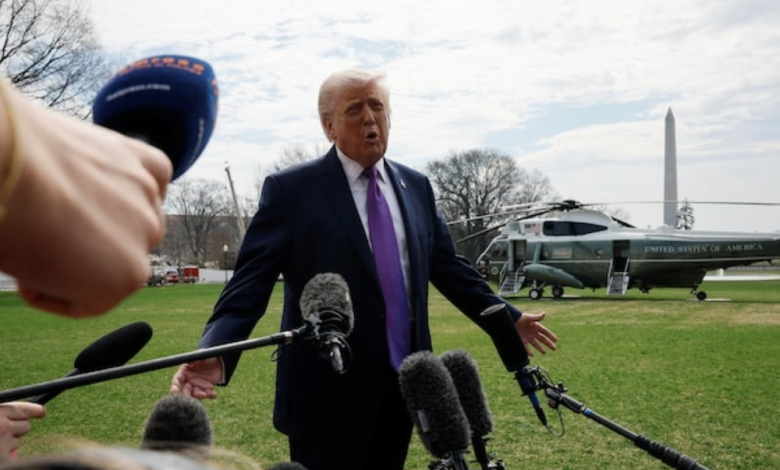
In response to the American statements, Araqchi strongly denied what Donald Trump told NBC News about Iran's eagerness to sit down at the negotiating table. Trump had claimed that Washington would continue its pressure to obtain better terms. Araqchi responded to these claims unequivocally, saying, "We have never asked for a ceasefire, nor have we ever asked to enter into negotiations." He added that Tehran had spoken with the Americans in the past, but they had chosen the path of escalation, thus closing the door to direct dialogue for the time being.
Security of the Strait of Hormuz and the international impact of energy markets
On the other hand, the Iranian Foreign Minister addressed a highly important international issue: maritime security in the Strait of Hormuz. The Strait of Hormuz is one of the world's most strategic waterways, through which approximately one-fifth of the world's daily oil supply passes. In this regard, Araqchi expressed Tehran's openness to dialogue with other countries that wish to secure the passage of their oil tankers. He explained that several countries have already contacted Tehran to guarantee safe passage for their ships, emphasizing Iran's readiness to cooperate in this area to ensure the stability of global energy supplies, without disclosing the names of those countries.
Regional and international repercussions of the Iranian position
This Iranian stance carries significant repercussions at both the regional and international levels. Regionally, this hardening of positions reflects the continued polarization and tension in the Middle East, particularly in light of ongoing conflicts and the heavy military presence in the Gulf. Internationally, Iran's assertion of its control and its readiness to secure the Strait of Hormuz for certain countries sends a strong message to global energy markets that Tehran remains a key player influencing energy security. Furthermore, its refusal to negotiate with the United States complicates international diplomatic efforts to contain the escalation in the region, foreshadowing a continued state of tension that casts a shadow over the global economy and geopolitical security.