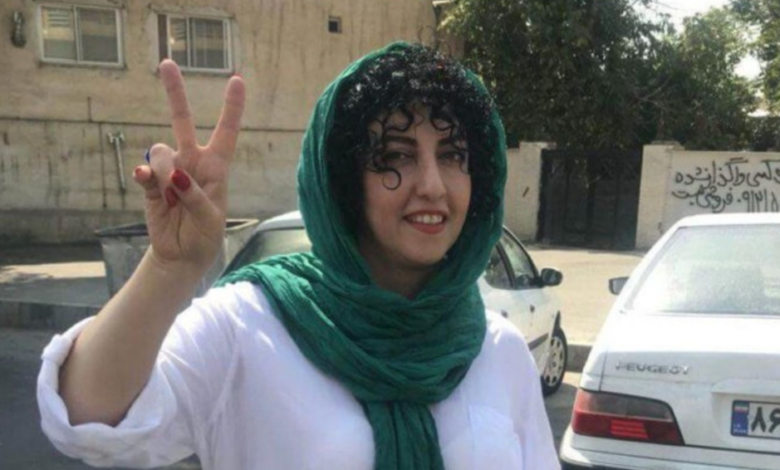

An Iranian court has sentenced prominent human rights activist Narges Mohammadi , the 2023 Nobel Peace Prize laureate, to an additional six years in prison, a move reflecting the continued crackdown on dissenting voices in the Islamic Republic. This sentence adds to a long list of punishments Mohammadi has faced over the past decade for her tireless human rights activism.
Details of the ruling and additional penalties
According to her lawyer, Mustafa Nili, speaking to Agence France-Presse, the court convicted his client of "assembly and conspiracy to commit crimes," which resulted in a six-year prison sentence. Furthermore, the court also sentenced her to an additional year and a half in prison for "engaging in propaganda activities" against the regime.
The sanctions included additional restrictive measures, with the court ordering a two-year travel ban against Narges Mohammadi, as well as a two-year banishment to the city of Khusf in South Khorasan province in eastern Iran. While the Iranian judiciary typically combines sentences in cases of multiple convictions, the backlog of cases against Mohammadi makes her legal situation extremely complex.
Narges Mohammadi: A symbol of the struggle for human rights
Narges Mohammadi, 53, is one of the most prominent human rights activists in Iran and the Middle East. Her long struggle culminated in her being awarded the Nobel Peace Prize in 2023, in recognition of her efforts to combat the oppression of women in Iran and her fight to promote human rights and freedom for all. She serves as vice president of the Defenders of Human Rights Center, founded by Nobel Peace Prize laureate Shirin Ebadi.
Mohammadi paid a heavy price for her stances, spending most of the past decade behind bars in Tehran's notorious Evin prison. Her cases often centered on her criticism of the death penalty, her advocacy for political prisoners, and, more recently, her support for the Woman, Life, Freedom movement, whose protests erupted in the fall of 2022.
Health suffering and the human dimension
Attorney Nili pointed out that the verdict is not final and is subject to appeal, expressing his hope for temporary release on bail for his client given her deteriorating health. Authorities had briefly released her for medical treatment following a delicate surgery involving tumor removal and bone grafting, but she was subsequently returned to prison to complete her sentence.
On the humanitarian level, Mohammadi is living the tragedy of forced separation from her family, as she has not been able to see her twin children, who live in exile in the French capital, Paris, since 2015, adding a heavy psychological burden to her physical and legal suffering.
General context and impact of the ruling
This verdict comes at a time of intense political and social tensions in Iran, and is interpreted by international observers as a clear message from the judiciary that international pressure and global awards will not grant immunity to activists within the country. The ruling reflects the judicial system's determination to deal firmly with the cases of prominent activists, raising concerns among international organizations such as the United Nations and human rights groups, which have consistently called for the immediate and unconditional release of Mohammadi and all prisoners of conscience.