Iran warns America: We will strike your bases in the region if you attack us

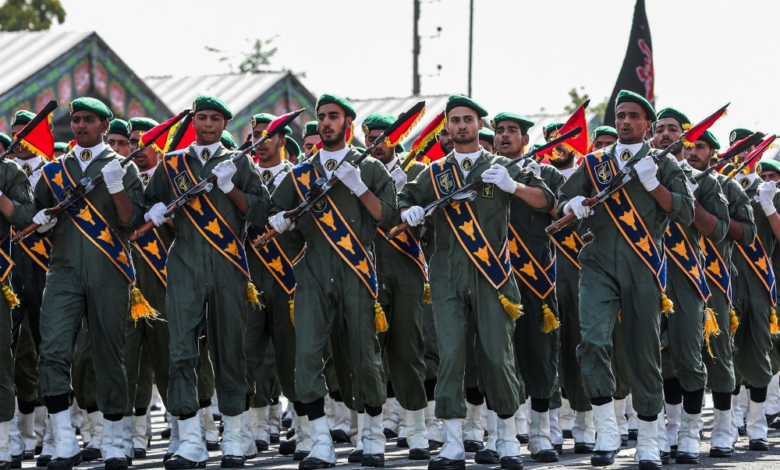
In a new escalation of rhetoric between Tehran and Washington, Iranian Foreign Minister Abbas Araqchi affirmed his country's absolute right to self-defense and direct military retaliation should it be attacked by the United States. These statements come at a sensitive time, marked by significant tension in relations between the two countries, coinciding with intensive diplomatic efforts to salvage the nuclear agreement and avert a slide into open military confrontation.
An explicit threat to strike American interests
In an interview with CBS News, Araqchi clarified that any American attack would be considered an act of aggression warranting an immediate and legitimate response. The Iranian minister explicitly outlined his country's military strategy in the event of conflict, acknowledging that Iranian missiles might not be capable of reaching the American continent, but he emphasized that the response would target "American bases in the region." This statement carries serious military implications, as American bases are spread across several Gulf states, as well as Iraq and Syria, meaning that any conflict could quickly escalate into a full-blown regional war.
Background to the tension and nuclear negotiations
These developments come within a complex historical context of tension and conflict, particularly since Washington's unilateral withdrawal from the nuclear agreement (the Joint Comprehensive Plan of Action) in 2018 and the subsequent "maximum pressure" campaign. The current statements are especially significant given the threats reportedly made by US President Donald Trump to launch a military strike if an agreement is not reached, particularly in light of ongoing internal protests in Iran and the controversy surrounding its expanding nuclear program.
The diplomatic track: A last chance in Geneva
Despite the threatening language, Araqchi was careful to leave the door open for diplomacy, indicating that there was a "good chance" of reaching an agreement acceptable to all parties. He revealed that a new round of talks was expected in Geneva on Thursday, the third such round after previous meetings in Muscat and Geneva. The minister confirmed that work was underway to prepare "elements of an agreement and a draft text," suggesting that the negotiations had moved beyond generalities to discussing precise technical and political details.
Potential regional and international repercussions
Observers believe that the success or failure of these negotiations will mark a turning point in the Middle East. On the one hand, failure and the resort to military action could destabilize global energy markets and threaten vital shipping lanes in the Arabian Gulf. On the other hand, reaching an agreement could pave the way for a broader regional de-escalation. Recent US military moves, including the deployment of two aircraft carriers to the region, serve as a dual deterrent: diplomatic pressure through the threat of force, and military preparation for worst-case scenarios.