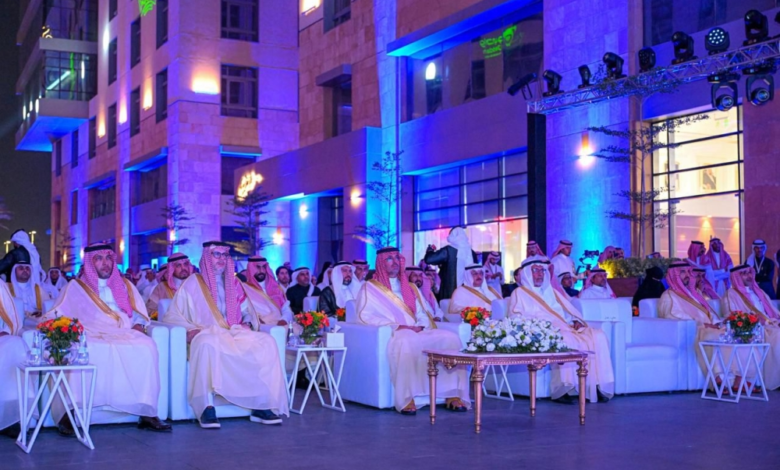
The Governor of Jeddah inaugurates Jeddah Innovation Valley at King Abdulaziz University

In a strategic move that reinforces the Kingdom of Saudi Arabia’s position as a regional hub for innovation and entrepreneurship, His Royal Highness Prince Saud bin Abdullah bin Jalawi, Governor of Jeddah, inaugurated today the “Jeddah Valley Innovation Complex” and the “Jeddah Valley Innovation and Business Zone.” This massive project falls under the umbrella of Jeddah Valley Company, the knowledge-based investment arm of King Abdulaziz University, and was attended by a distinguished group of academic and executive leaders, including Dr. Ahmed bin Hamed Naqadi, a member of the University’s Board of Trustees; Dr. Tarif bin Yousef Al-Aama, the University President; and Dr. Sattam Linjawi, the company’s CEO.
Strengthening the knowledge economy system
The launch of this complex comes at a crucial time, aligning with the goals of the Kingdom's Vision 2030, which places great emphasis on the transition to a knowledge-based economy. King Abdulaziz University is one of the leading academic institutions that, through its investment arm, Jeddah Valley, seeks to bridge the gap between academic research and commercial applications. This project is not merely a real estate development; it represents an integrated environment aimed at transforming patents and research ideas into commercial products and startups capable of competing in both the local and global markets.
Advanced infrastructure and strategic location
The project boasts world-class specifications that reflect the ambitious goals set for it. The Jeddah Valley Innovation and Business District spans a total area of 81,791 square meters. The complex comprises seven modern buildings with a total built-up area of 40,000 square meters, supported by 700 parking spaces for residents and visitors. The project's strategic location on Prince Majid Road is a key advantage, connecting the area to King Abdulaziz International Airport and vital centers in Jeddah. This facilitates easy access and makes it an attractive destination for international companies seeking to establish regional headquarters near the university campus and its young talent pool.
Partnerships and agreements to support the health sector
The opening ceremony included a tour of the complex's facilities by His Royal Highness the Governor of Jeddah, who viewed the state-of-the-art equipment and innovation labs. The ceremony also featured a presentation showcasing Wadi Jeddah Company's journey and achievements in localizing technology. In line with its commitment to strengthening community and professional partnerships, the ceremony witnessed the signing of several key cooperation agreements between Wadi Jeddah Company and both the Saudi Society of Obstetrics and Gynecology and the Saudi Society of General Surgery. These agreements aim to develop the medical business environment and support innovation in the healthcare sector, reflecting the company's comprehensive vision that encompasses various vital sectors.
An environment conducive to innovation and investment
Dr. Sattam Linjawi, CEO of Wadi Jeddah, affirmed that the zone was designed as an integrated platform bringing together innovators, entrepreneurs, and investors. The zone offers advanced digital and logistical infrastructure, including co-working spaces, modern offices, and business accelerator programs. This ecosystem aims to attract major companies to leverage its proximity to university research centers, thereby creating high-quality investment opportunities that contribute to job creation, support sustainable development in the region, and solidify the concept of venture capital investment in technological and scientific projects.