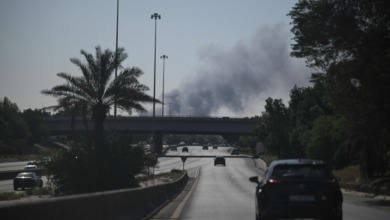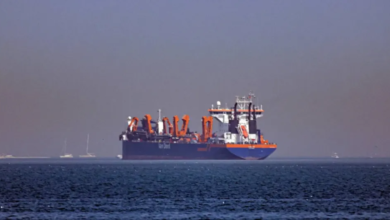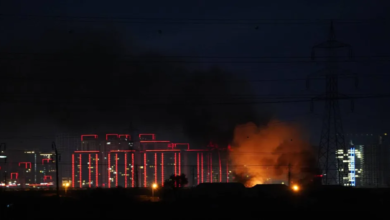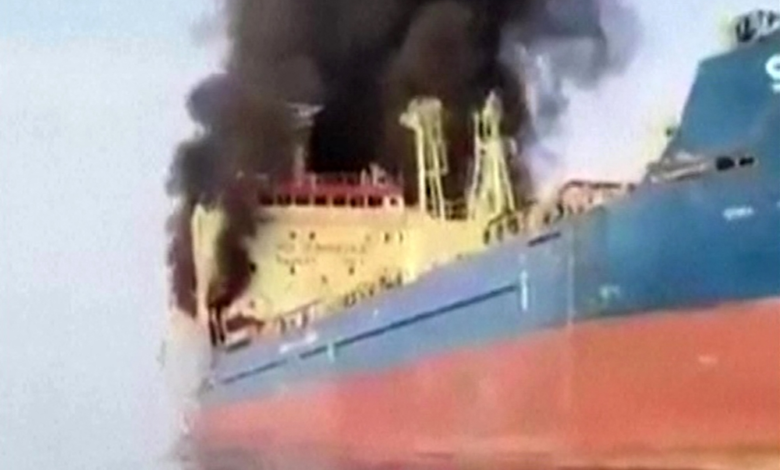
In a dangerous escalation threatening maritime security in the region, the Maritime Security Center in the Sultanate of Oman announced that an oil tanker was attacked by a drone boat off the coast of Muscat, the capital, resulting in the death of one crew member and causing significant material damage to the vessel. This incident further exacerbates geopolitical tensions in vital waterways connecting the Middle East to global markets.
Details of the incident and casualties
The Maritime Security Centre (MSC) stated in an official statement that the targeted tanker was named "MKD VYOM" and flew the flag of the Republic of the Marshall Islands. The attack occurred on Monday, 52 nautical miles off the coast of Muscat Governorate. The MSC explained that the attack was carried out by an unmanned boat, resulting in a powerful explosion followed by a fire in the tanker's main engine room.
The tragic incident resulted in the death of one crew member, an Indian national. Emergency response teams quickly evacuated the entire 21-member crew to ensure their safety. The crew members included 16 Indian nationals, 4 Bangladeshi nationals, and 1 Ukrainian national, all of whom were transported to receive necessary medical care.
Regional context and the importance of geographical location
This attack comes in a region of paramount strategic importance to the global economy. The Gulf of Oman and the Strait of Hormuz are among the most vital waterways for transporting oil and gas from the Arabian Gulf to the rest of the world. Historically, this region has witnessed a series of similar incidents targeting commercial vessels and oil tankers, and fingers are often pointed at Iran or its proxies for such attacks, particularly given the use of unmanned boats and drones.
These incidents are part of a broader context of maritime tensions in the region over the past years, sometimes referred to as a maritime "shadow war," where ships are subjected to harassment or direct attacks, necessitating continuous intervention from international naval forces to ensure freedom of navigation.
Expected repercussions and impact of the incident
This incident is expected to cast a shadow over maritime security in the region. Economically, such attacks typically lead to higher insurance costs for shipping passing through the area, which can, in turn, affect global energy prices. The incident also raises renewed concerns among international shipping companies about the safety of their crews and vessels.
Internationally, the killing of the Indian sailor is expected to provoke diplomatic reactions, particularly from India, whose citizens constitute a significant portion of the maritime workforce in the region. This incident underscores the urgent need to strengthen international cooperation to secure waterways and protect global trade from escalating threats.