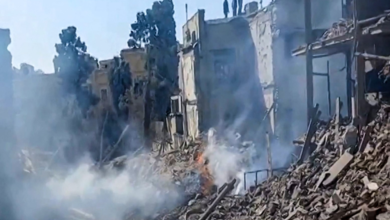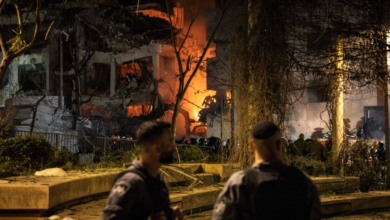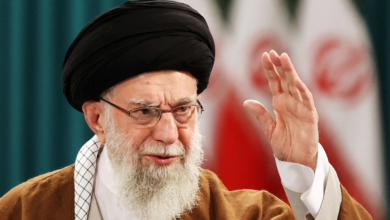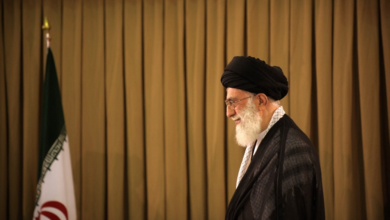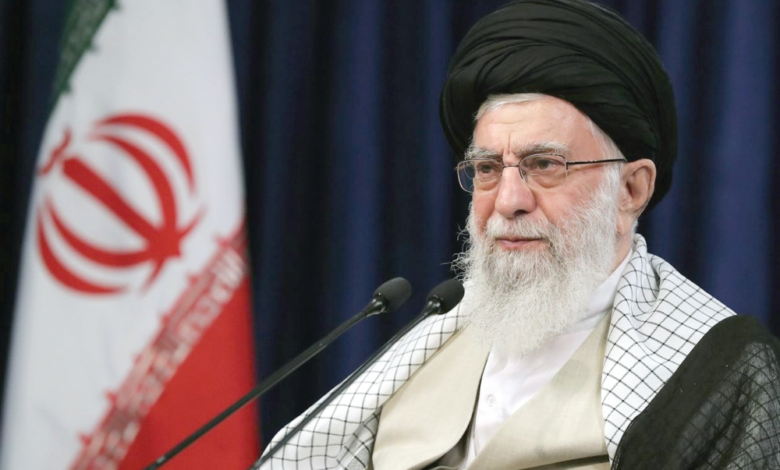
In breaking news that shook political and media circles, Iranian state television officially announced the death of the Supreme Leader of the Iranian Revolution, Ayatollah Ali Khamenei. This announcement marks a pivotal turning point in the history of modern Iran and the entire region, amid intense international anticipation for official details regarding the circumstances of the incident and the upcoming power structure in Tehran.
Historical background: The end of a long era
Ali Khamenei is the most powerful and influential figure in the Iranian political system, having served as Supreme Leader since 1989, succeeding the founder of the Islamic Republic, Ruhollah Khomeini. For over three decades, Khamenei has held absolute power, overseeing the Revolutionary Guard, the judiciary, and the state media, and determining the country's foreign and strategic policies. His passing today represents not merely the loss of a political figure, but the end of a long era that has shaped modern Iran and its complex relationships with the West and neighboring countries.
The mechanism for transferring power and the Council of Experts
With the news confirmed, attention immediately turns to the constitutional mechanisms for the transfer of power in Tehran. According to Article 111 of the Iranian Constitution, the Assembly of Experts, an elected religious body, is responsible for selecting the new Supreme Leader. In the event of a vacancy in the position, a temporary Consultative Assembly assumes leadership duties until a successor is elected. This process is one of the most sensitive moments in the Iranian system, as the balance of power between the Revolutionary Guard and the religious establishment will play a crucial role in determining the identity of the next leader and the future direction of the state.
Regional and international repercussions
The impact of this event is not confined to Iran's borders; it extends to the entire geopolitical landscape of the Middle East. Iran has long been a pivotal player in complex issues stretching from Syria and Lebanon to Yemen and Iraq. Khamenei's absence could lead to strategic uncertainty, raising questions about the future of international agreements, nuclear negotiations, and the level of tension with regional and international powers. Political analysts are closely watching whether this change will result in a more hardline or a more open approach to Iranian policies, depending on who succeeds him.
Potential economic impacts
On the economic front, this news is expected to cast a shadow over global markets, particularly energy and oil markets, given Iran's strategic location and its control of the Strait of Hormuz, a vital artery for global oil supplies. Any political instability in Tehran often translates into immediate fluctuations in crude oil and gold prices, putting the global economy on high alert to monitor rapidly evolving developments.