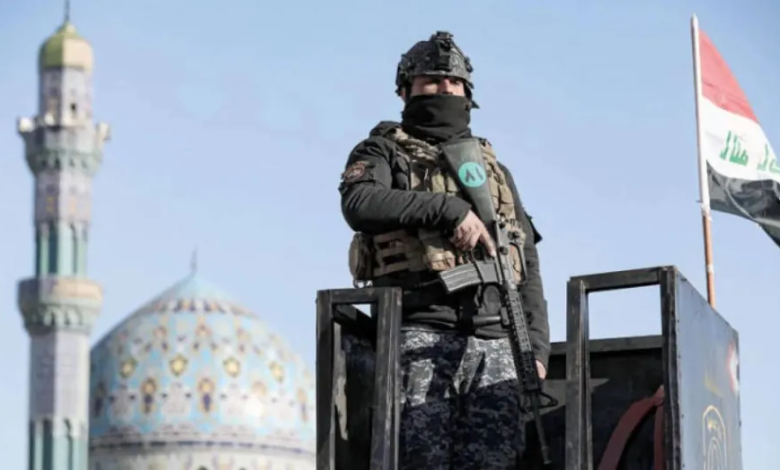
The Iraqi arena witnessed a significant security development with Kataib Hezbollah issuing explicit and direct threats against US forces in response to recent airstrikes targeting the armed group's positions. This escalation further complicates the security and political landscape in Baghdad, amid fears of a slide into open conflict that could destabilize the entire region.
Threat details and field context
Kataib Hezbollah, one of the most prominent factions within the "Islamic Resistance in Iraq," issued a strongly worded statement asserting that the American targeting of its positions would not go unpunished. The group indicated that multiple options for retaliation were open, hinting at the possibility of expanding the scope of attacks to include vital American bases and interests in Iraq and the region. These threats typically follow airstrikes launched by Washington, which it describes as "defensive," in response to drone and missile attacks targeting its bases, such as Ain al-Asad in Anbar or Harir in Erbil.
Historical background and nature of the conflict
To understand the depth of this tension, one must examine the historical background of the relationship between armed factions and the American presence in Iraq. Since the 2003 US invasion, Kataib Hezbollah has been at the forefront of groups resisting the foreign presence. Although many factions were integrated into the official Iraqi state-run Popular Mobilization Forces (PMF) following the fatwa of defensive jihad against ISIS, some factions maintained their own structures and independent decision-making regarding their dealings with US forces, which they consider an occupying force that must be expelled by force.
The government's position and the challenges to sovereignty
This escalation places the Iraqi government in a very difficult position. On the one hand, Baghdad seeks to maintain balanced diplomatic relations with Washington within the framework of the Strategic Framework Agreement. On the other hand, it faces immense internal pressure from political forces close to the factions to end the international coalition's mission. The Iraqi government considers the American bombing a violation of national sovereignty, while Washington believes that the government's failure to protect its forces gives it the right to respond directly, creating a vicious cycle of action and reaction.
Expected regional and international repercussions
What is happening in Iraq cannot be separated from the tense regional landscape, particularly in light of the ongoing events in Gaza and the tensions between the United States and Iran. Observers believe that the Iraqi arena has become a battleground for exchanging fiery messages between major powers, with military escalation being used as a tool of political pressure. The continuation of this pattern of attacks and mutual threats could hinder efforts to stabilize Iraq's economy, negatively impact negotiations for the withdrawal of coalition forces, and even drag the region into a wider conflict with unpredictable consequences.