
The spokesman for Iran's Revolutionary Guard was killed in an unprecedented escalation
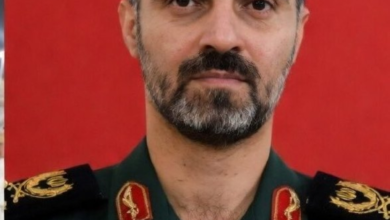
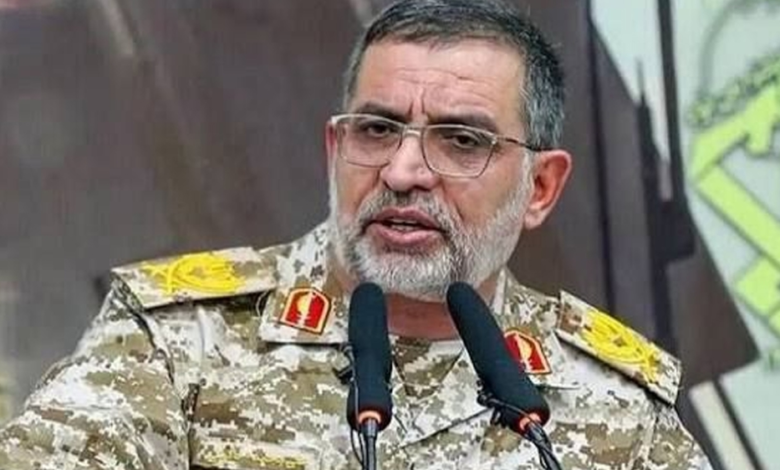
In a highly significant military development, the Iranian Revolutionary Guard officially announced on Friday the death of its spokesman, Brigadier General Ali Mohammad Naeini, following a series of intensive airstrikes launched by joint US and Israeli forces. This event marks a pivotal turning point in the escalating tensions in the Middle East, reflecting a shift from proxy wars to the direct targeting of high-ranking Iranian leaders within Iranian territory.
Details of the attack on Lorestan province and the extent of the losses
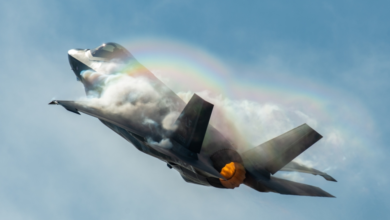
According to an Iranian security official, Lorestan province in western Iran was subjected to an unprecedented aerial assault, with the region targeted by more than 100 US and Israeli airstrikes. These intense attacks resulted in heavy casualties, with the confirmed deaths of 80 Iranian soldiers and 64 civilians. Lorestan province holds significant strategic and military importance, as international intelligence reports indicate that its rugged mountains contain secret military bases and underground missile facilities belonging to the Islamic Revolutionary Guard Corps (IRGC), which explains the heavy bombardment directed at it in this complex military operation.
Who is Ali Muhammad Naini?
Brigadier General Ali Mohammad Naeini was a prominent figure within the Iranian Revolutionary Guard Corps (IRGC), having recently served as its official spokesperson and head of public relations. Naeini played a pivotal role in managing Iran's psychological and media warfare, particularly during successive regional crises. His assassination represents a significant blow to the morale and public relations of the Iranian military establishment, as he was the voice of the IRGC's policies and directives both domestically and internationally.
Historical context and the escalation of the shadow war
This event cannot be understood in isolation from its broader historical and geopolitical context. For decades, Iran and Israel have been engaged in what is known as a “shadow war,” which has included cyberattacks, assassinations of nuclear scientists, and tit-for-tat attacks on ships. However, the pace of these confrontations escalated dramatically following the outbreak of the Gaza war, and the scope of the conflict expanded to include Iran’s allies in the region. These joint US-Israeli strikes come as an extension of a series of assassinations targeting prominent Iranian leaders in Syria, Lebanon, and within Iran itself, reflecting a strategic decision to strike directly at the heart of the Iranian military establishment.
Expected repercussions and effects
Domestically, these strikes are expected to spark a wave of internal anger in Iran, increasing pressure on the political and military leadership to retaliate in order to save face and restore deterrence. The country is also witnessing an unprecedented security and military mobilization in anticipation of further attacks.
Regionally, this escalation threatens to plunge the region into a full-blown regional war. Iran may deliberately activate multiple fronts through its proxies in the region to target American and Israeli interests, jeopardizing the security and stability of all neighboring countries and maritime navigation.
On the international level, direct US involvement in these strikes has raised global concerns about a wider conflict. This event will have immediate economic repercussions, most notably the potential for a surge in global oil prices due to fears of the Strait of Hormuz being closed or energy facilities being targeted, thus presenting the international community with a complex diplomatic challenge to prevent further deterioration.