The Revolutionary Guard bombs Netanyahu's office, and Trump threatens a Venezuelan scenario


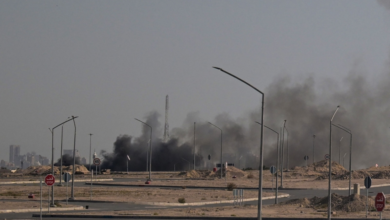
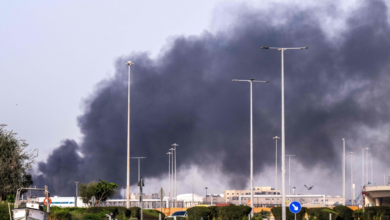
In a dangerous escalation of events in the Middle East, the Iranian Revolutionary Guard officially announced that its ballistic missiles directly targeted the office of Israeli Prime Minister Benjamin Netanyahu, as well as the headquarters of the Israeli Air Force commander. The statement, carried by the Iranian news agency Fars, said the operation was carried out using Khaibar missiles, describing the targets as belonging to the "criminal Zionist regime," in a move indicating a heightened direct confrontation between Tehran and Tel Aviv.
Trump reveals details of attack scenario
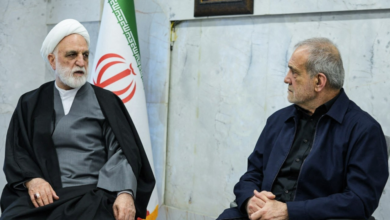
On the other hand, in remarks reported by the media, former US President Donald Trump commented on the escalating tensions, indicating that a potential attack on Iran could take up to five weeks. Trump drew parallels between the current situation and what happened in Venezuela, suggesting that the "Venezuelan scenario" could be the ideal model for dealing with Tehran, while simultaneously calling on the Iranian military and Revolutionary Guard Corps to lay down their arms.
The New York Times quoted Trump as saying that Washington has multiple options regarding Iran's future leadership, hinting at the possibility of a power transfer through internal pressure similar to what has occurred in other countries. Trump expressed a conditional openness to lifting sanctions on Iran if a new, more pragmatic leadership were to take power, leaving it to the Iranian people to act against the current government, and emphasizing that the United States possesses a massive arsenal of missiles and bombs to support any military action.
The context of the conflict and the development of missile capabilities
This announcement comes within the historical context of an indirect conflict that has gradually transformed into open confrontations between Iran and Israel. Tehran has long relied on developing a massive arsenal of ballistic missiles and drones in its defensive and offensive strategy. The Khaibar missile (the fourth generation of the Khorramshahr missile) is one of the most prominent of these weapons, with a range of up to 2,000 kilometers and high destructive power, placing it among the strategic tools that Iran brandishes to threaten the Israeli heartland.
Potential regional and international repercussions
Targeting key government sites like the prime minister's office and the air force headquarters carries serious implications that extend far beyond mere military skirmishes. Regionally, this escalation could drag the entire region into a full-blown war, especially given the potential involvement of Iran's proxies. Internationally, Trump's pronouncements about "regime change" and military scenarios are reshuffling the diplomatic landscape, potentially driving up oil prices and posing new challenges to the global economy amidst the prevailing geopolitical uncertainty.