The Revolutionary Guard bombs Netanyahu's office, and Trump threatens a Venezuelan scenario

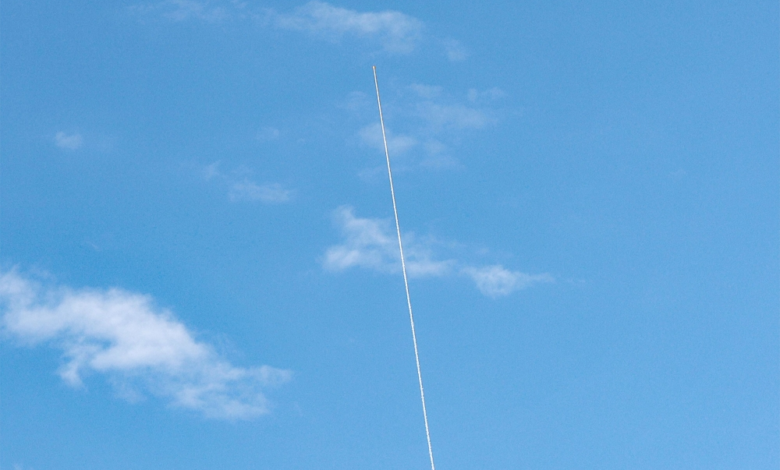
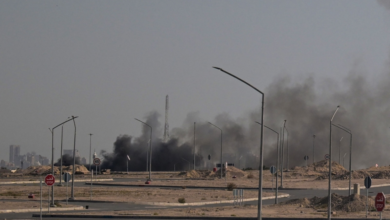
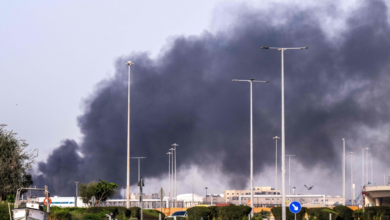
In an unprecedented military escalation that threatens to dramatically alter the landscape of the Middle East conflict, the Iranian Revolutionary Guard Corps (IRGC) officially announced a missile attack targeting highly sensitive sites deep inside Israel. According to the statement, the Iranian missiles struck the office of Israeli Prime Minister Benjamin Netanyahu , as well as the headquarters of the Israeli Air Force, representing a transgression of all red lines in the traditional rules of engagement between the two sides.
Details of the attack with "Khaibar" missiles
The Fars News Agency quoted a statement from the Islamic Revolutionary Guard Corps (IRGC) confirming that the operation was carried out using Khaibar missiles, tactical ballistic missiles characterized by their long range and high maneuverability, indicating a strategic deterrent message from Tehran. The statement described the targets as "the office of the prime minister of the criminal Zionist regime and the headquarters of the Air Force commander," a clear indication of Iran's intention to directly target the top political and military leadership in Tel Aviv.
Trump: The Venezuela scenario could be repeated in Tehran
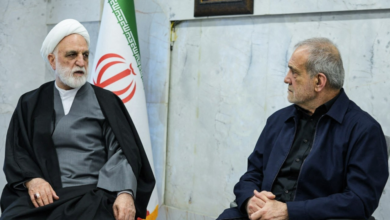
Concurrently with this escalation, US President Donald Trump fiery remarks, as reported by The New York Times, outlining a new phase of maximum pressure on Tehran. Trump indicated that an attack on Iran could last for five weeks, drawing a parallel to the situation in Venezuela as a potential scenario for regime change in Iran.
Trump called on the Iranian military and Revolutionary Guard to lay down their arms, asserting that the United States possesses a massive arsenal of missiles and bombs to support its operations. He added, "We have three very good options regarding who could lead Iran," indicating his openness to lifting sanctions in the future if a "pragmatic" leadership assumes power, while leaving it to the Iranian people to overthrow the current government.
Conflict context and strategic dimensions
This development comes within a historically tense context, as the confrontation between Iran and Israel has shifted from a "shadow war" involving cyberattacks and proxy operations to a direct and open confrontation. The targeting of the Israeli Prime Minister's office represents a significant escalation, reflecting an Iranian decision to alter the deterrence equation, particularly following a series of assassinations targeting leaders within the resistance axis.
Observers believe that the use of the "Khaibar" missiles carries significant military implications. These missiles, which Iran has unveiled in recent years, are considered to be of a new generation capable of penetrating missile shields, thus posing real challenges to Israeli air defense systems.
Expected regional and international repercussions
This event is expected to cast a dark shadow over the stability of the entire region. Internationally, this direct targeting and Trump's statements about "regime change" could accelerate the military buildup in the Gulf and the Mediterranean. Economically, this news raises concerns in global energy markets about the potential disruption of oil supplies through the Strait of Hormuz in the event of a full-scale confrontation.
The question remains as to the nature of the expected Israeli and American response, and whether the region will head towards an open war that will last for the five weeks that Trump hinted at, or whether diplomatic efforts will succeed in containing the situation before the big explosion