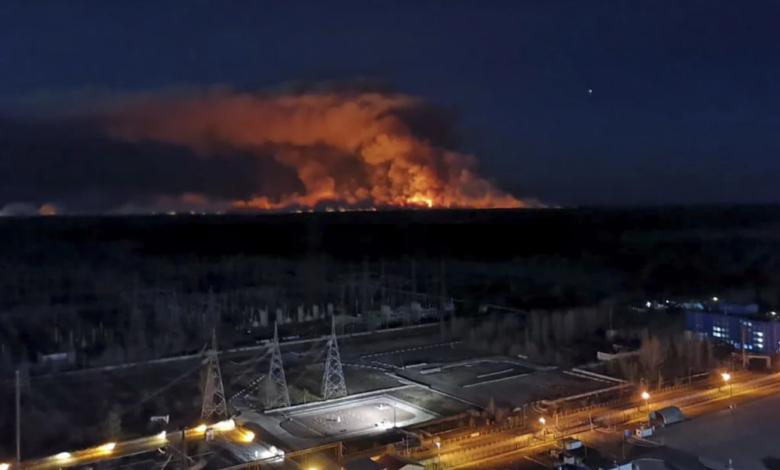

Large fire in the Chernobyl exclusion zone
Ukrainian authorities have reported a large forest fire in the Chernobyl exclusion zone in the north of the country, following the crash of an unidentified drone. The site's management confirmed that the fire, which started on Thursday, continued to burn through Friday, covering an estimated 1,100 hectares. They noted that strong winds were significantly hampering firefighters' efforts to control the blaze. Despite the fire's scale, authorities reassured the public that no increase in radiation levels had been detected in the surrounding area, but close monitoring continues.
The historical context of the Chernobyl disaster
This incident brings to mind the dangers inherent in the Chernobyl region, which experienced the worst nuclear disaster in history on April 26, 1986. The explosion of reactor number four at the Chernobyl Nuclear Power Plant released enormous quantities of radioactive material into the atmosphere, causing widespread contamination across Europe. Following the disaster, an exclusion zone of more than 2,600 square kilometers was established around the plant, and hundreds of thousands of residents were evacuated. Decades later, the area, particularly its forests and soil, still retains high levels of radiation, making any fire there a source of global concern.
The importance and potential effects of fire
The main danger of the Chernobyl forest fires lies in their ability to release radioactive particles, such as cesium-137 and strontium-90, which have accumulated in the soil, vegetation, and trees over the years. When this organic material burns, the smoke and ash can carry these radioactive particles back into the atmosphere, allowing them to travel long distances with the wind. This poses a risk not only to the health of firefighters and residents in nearby areas of Ukraine and neighboring Belarus, but also raises international concerns about the potential for this radioactive contamination to spread across borders to other European countries. The current situation, marked by the Russian-Ukrainian war, further complicates matters. At the beginning of the 2022 invasion, the area was temporarily under the control of Russian forces, highlighting the additional security and environmental risks facing this sensitive site.