Israel strikes Tehran and central Iran with 80 fighter jets: details of the escalation

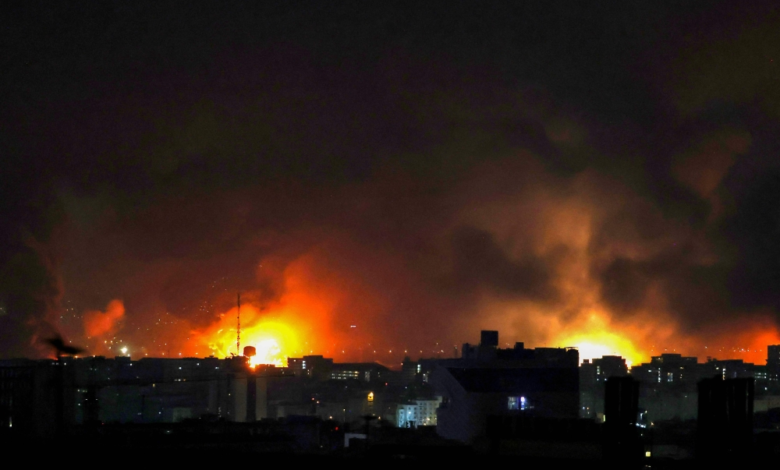
In a significant military development that threatens a dangerous escalation in the Middle East, the Israeli army officially announced a large-scale series of precision airstrikes targeting strategic military sites in the Iranian capital, Tehran, and areas in central Iran. Military reports indicated that the operation, described as one of the most complex air operations ever conducted, involved more than 80 Israeli fighter jets, which flew long distances to achieve their objectives with high accuracy.
This massive military operation comes as a direct response to the ongoing threats and attacks Israel has faced recently. The deployment of such a large number of fighter jets sends a powerful deterrent message, demonstrating the Israeli Air Force's ability to operate in distant and hostile airspace and to overcome complex air defense systems. Military analysts indicate that the operation required meticulous logistical planning, including aerial refueling and high-level intelligence coordination to accurately identify targets and avoid civilian casualties.
Historically and contextually, this attack cannot be separated from the escalating tensions between the two sides, which have moved from a phase of "shadow warfare" and cyberattacks or proxy operations to one of direct and open confrontation. This attack represents a new episode in the recent escalation in the region, particularly following Iran's previous ballistic missile attacks, making an Israeli response predictable within the new rules of engagement that are beginning to take root in the region.
Strategically, according to available sources, the Israeli strikes focused on neutralizing specific military capabilities, including missile production plants and air defense systems. This reflects a desire to weaken Iranian offensive capabilities without necessarily being drawn into a full-scale war that could affect oil or nuclear infrastructure, something the United States and international powers had warned against in order to avoid igniting the entire region.
The repercussions of this attack by 80 fighter jets will not be limited to the military sphere; they will extend to far-reaching geopolitical and economic effects. Global markets are closely watching the reactions and the potential impact on energy prices and shipping routes, while international powers are intensifying their diplomatic efforts to contain the situation and prevent it from escalating into a full-blown regional war that could have dire consequences for international peace and security.