Israel strikes Tehran: Aerospace Force headquarters and Qamar Khayyam facilities destroyed

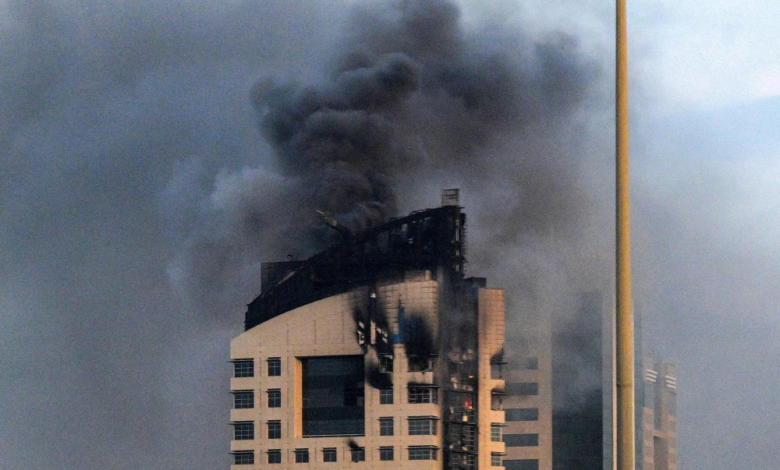
On Sunday, the Iranian capital, Tehran, was rocked by a series of powerful explosions that reverberated throughout the city, sparking heightened tensions and anticipation in the region. According to field reports and eyewitness accounts from journalists, plumes of smoke blanketed the city's skies, amid reports of attacks targeting sensitive strategic sites. This marked the ninth day of a military escalation described by sources as a US-Israeli war against Iran.
Details of the Israeli targeting of the Aerospace Force headquarters
In a significant development in the military landscape, the Israeli army claimed direct responsibility for the attacks, confirming that it had targeted and dismantled the headquarters of the Iranian Revolutionary Guard's Aerospace Force in Tehran. The Israeli statement clarified that the targeted site was not merely an administrative building, but also served as a reception, transmission, and research center for the Iranian Space Agency, which is closely linked to the regime's military apparatus.
Intelligence information revealed by the Israeli side indicated that the site housed advanced research facilities, in addition to the command and control center for the Khiam satellite. Israel claims that this satellite, previously launched by Iran in cooperation with Russia, is used for sophisticated espionage purposes to monitor Israeli movements and gather sensitive information about infrastructure and the population, which made destroying its control center a priority in Israel's target bank.
Targeting the energy lifeline and the repercussions of escalation
The attacks were not limited to the military and technological spheres, but extended to economic infrastructure, with reports indicating that oil depots in and around the capital were targeted. Targeting energy storage facilities carries serious implications, suggesting an expansion of the conflict to include economic warfare, which could have repercussions for global energy markets and exacerbate instability in the region.
Strategic context and importance of aerospace power
The Aerospace Force of Iran’s Islamic Revolutionary Guard Corps (IRGC) is considered Tehran’s long arm, overseeing the ballistic missile and drone programs, as well as space operations. Targeting its headquarters in the heart of the capital is a significant moral and operational blow, the impact of which far exceeds the direct material losses. This event comes within a historical context of escalating tensions, as the confrontation between the two sides has moved from a “shadow war” of cyberattacks and assassinations attributed to Mossad to direct confrontation and declared airstrikes.
Observers believe that this dangerous escalation could drag the region into open-ended scenarios, especially with oil facilities becoming targets, which calls for anticipating potential Iranian reactions and their impact on regional and international security.