Assassination of Ali Larijani and the Basij commander: Details of the Israeli announcement

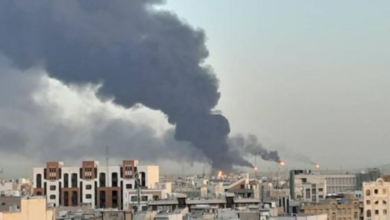
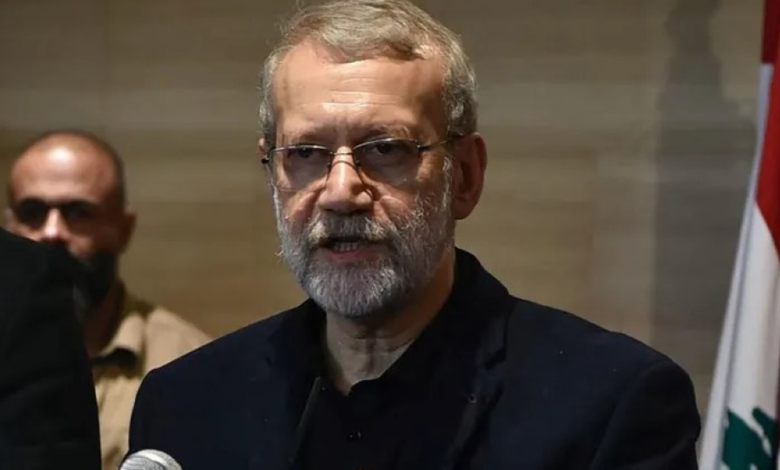
In a dramatic development reflecting escalating tensions in the Middle East, Israeli Defense Minister Yisrael Katz announced on Tuesday that the Israeli military had carried out a targeted assassination operation against prominent Iranian figures. According to Al Arabiya, the operation included the killing of Ali Larijani, the former Secretary of Iran's Supreme National Security Council, as well as the commander of Iran's Basij militia, a move that threatens wide-ranging regional and international repercussions.
Who is Ali Larijani? And what is his importance in the Iranian political landscape?
Ali Larijani is one of the most prominent political and security figures in the Islamic Republic of Iran. He has held sensitive and pivotal positions over the past decades, most notably serving as Speaker of the Islamic Consultative Assembly (the Iranian Parliament) for several terms and as Secretary of the Supreme National Security Council, where he led negotiations on Iran's nuclear program with Western powers. Larijani is also considered a close advisor to Iran's Supreme Leader, Ali Khamenei. Targeting a figure of such political and diplomatic stature represents a qualitative shift in Israel's target bank, moving beyond purely military operations to striking at the heart of Tehran's political and strategic interests.
Basij Forces: The mobilization arm of the Revolutionary Guard
the Basij commander . The Basij, a paramilitary force established in 1979 by order of Iran's first Supreme Leader, Ruhollah Khomeini, operates under the direct command of the Islamic Revolutionary Guard Corps (IRGC). The Basij plays a vital role in Iran's internal security, as well as providing logistical and operational support for Tehran's regional influence. The loss of the Basij's top commander is a significant blow to Iran's security and military structure, potentially impacting Tehran's ability to manage internal crises and coordinate its foreign operations.
Historical context and the escalation of the "shadow war"
This announcement comes amid an unprecedented escalation between Israel and Iran, which has recently moved from a “shadow war” to direct confrontation. Over the past few months, the region has witnessed a series of assassinations targeting leaders in the Iranian Revolutionary Guard, such as the attack on the Iranian consulate in Damascus that killed Mohammad Reza Zahedi, as well as the assassinations of prominent figures in Iranian-backed factions. Israel is pursuing a strategy aimed at weakening the Tehran-led axis by eliminating its masterminds, field commanders, and political leaders.
Expected repercussions: locally, regionally, and internationally
Domestically and regionally , this incident is expected to provoke angry reactions within Iran, placing the Iranian leadership under significant pressure to respond in order to save face and restore deterrence. This response could include direct missile attacks or the mobilization of regional proxies. Internationally , this escalation raises serious concerns within the international community about the region sliding into a full-blown regional war. Furthermore, tensions in this sensitive region cast a shadow over the global economy, particularly concerning energy prices and maritime security in the Strait of Hormuz and the Arabian Gulf.
In conclusion, the announcement by newly appointed Israeli Defense Minister Yisrael Katz reflects a more assertive and determined Israeli approach to decisively winning battles on multiple fronts. The coming days will be crucial in shaping the geopolitical landscape of the entire Middle East.